Related: Earbud Fit for Small Ear Canals: What Actually Stops the Pain
I held onto wired headphones with a 3.5mm jack for years, running clunky adapters that died every few months. I was right about the sound, too. Wired still sounds better, and I will say that until I am hoarse. But the phone moved on, the adapters kept dying, and eventually you stop fighting reality and start shopping for noise cancelling earbuds that do not make you miserable.
I do live sound and recording cleanup work around Nashville, so my serious listening happens on a reference pair at the desk that never leaves the house. Everything else, walks, chores, the gym, the commute, happens on cheap wireless. That has put me through the wringer: reviews that contradicted each other, pairs that fell out mid-walk, and ear canals that hurt with every tip size and material I tried. I have bought the same budget pair three times now, and losing two of them genuinely stung.
So this is the comparison I wish someone had handed me. Four pairs, what each one is actually for, and the checks I run before I trust any of them. Fit first. Battery second. Volume floor always.
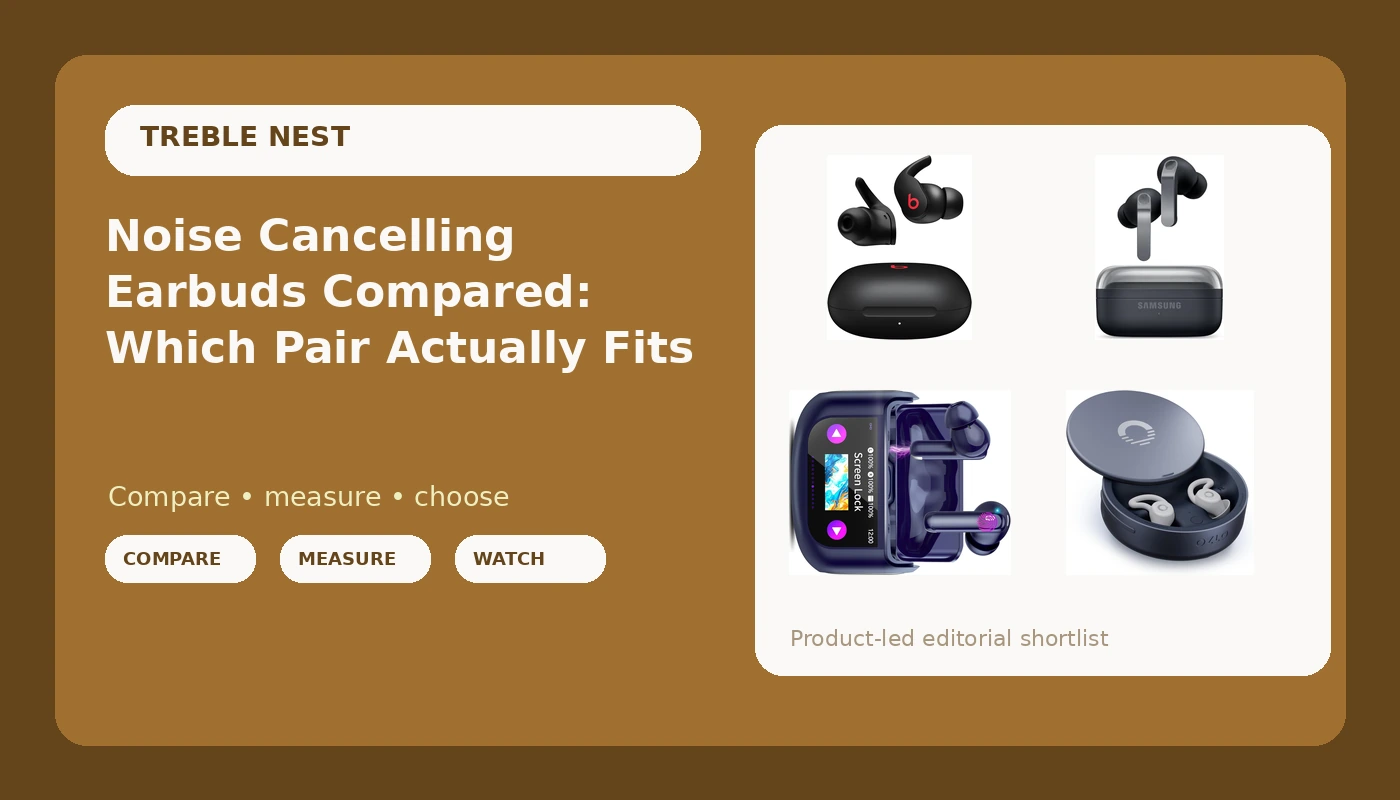
Best Overall: Beats Fit Pro (1st Gen)
The wingtip is the whole reason this pair sits at the top of the list. My ear canals are small and they hurt easily, and almost every bud I try fails on that alone. A wingtip anchors the bud in the outer ear instead of asking a silicone tip to wedge itself deeper into the canal, and that is the difference between a two hour walk and twenty minutes of throbbing. It is the design choice I look for first.
Beyond the fit, the spec sheet here is the one I would want if I were only buying one pair: active noise cancelling in the name, sweat resistance for the gym, and compatibility with both Apple and Android, which matters more than people admit. I use an iPhone for daily life and Android hardware for work, and a pair that works on both is worth a lot to me. Class 1 Bluetooth is the range class I want, because I set my phone down and wander.
The honest caveat is the same one I give about every premium-tier pair: you are paying for the badge and the fit system, not for magic. 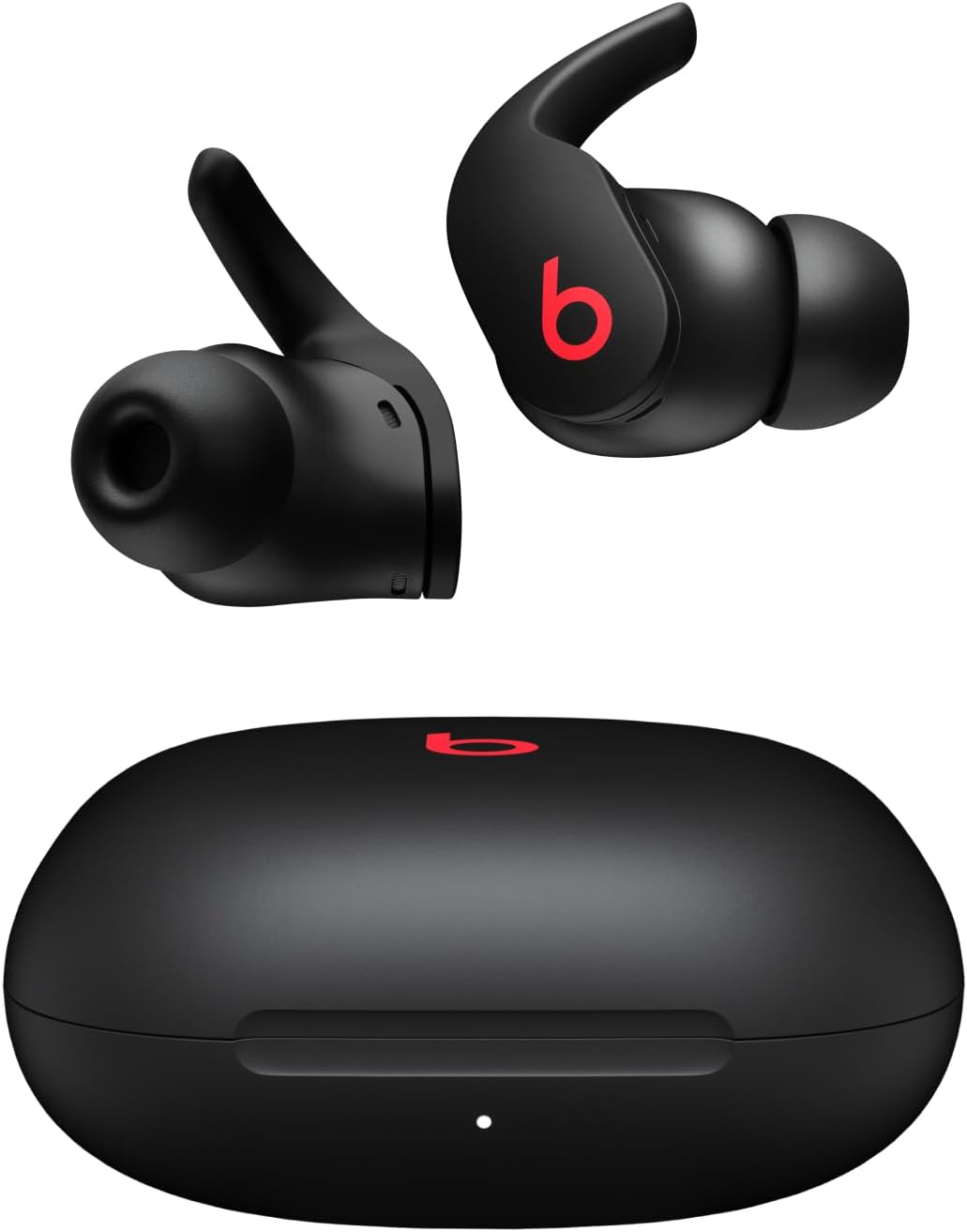 Visit on Amazon →.
Best for Features: Samsung Galaxy Buds 4 Pro (2026)
This is the newest thing on the table, and the name tells you what you are buying: a 2026 model with AI features built into the pitch. I am not going to pretend the AI label does something specific for your commute, because that kind of language means different things on different phones. What I can tell you is the question to ask before you spend this kind of money: does the feature set actually run on the phone in your pocket?
If you are already in the Galaxy ecosystem, the answer is probably yes, and this is the pair that gets the newest tricks first. If you are on an iPhone or an older Android, you are paying a premium for capability that stays locked. That is the whole decision, and it has nothing to do with how the buds sound.
What I like about it as a category entry is that it is a proper flagship build in black, the kind of pair you can wear to a meeting and to the gym without it looking like a compromise. What I would verify in week one is the fit, because no amount of AI fixes a tip that hurts. 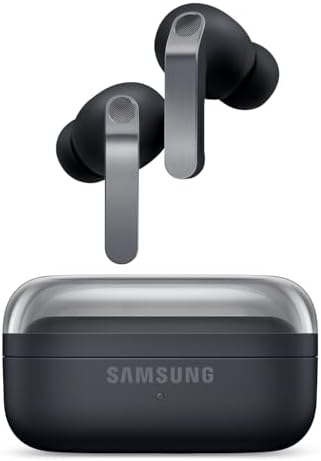 Visit on Amazon →.
Best Budget: Thunelec Active Noise Cancelling Ear Buds
This is my lane. The budget tier is where I have spent the most money over the years, mostly because I keep losing pairs, and it is where "fine" is the highest praise I hand out. The Thunelec pair carries active noise cancelling and a 48H claim in the name, in a blue colorway that will at least be easy to find in a bag.
Here is my rule about that 48H number: it is a claim, not a measurement, and the only figure that counts is how long the buds last at your normal listening volume. I have watched pairs die at two hours while the box promised a work week. A charging case that tops the buds back up is not extra battery life, it is a recharge, and I refuse to call it anything else.
What this pair is for is the job the budget tier always does: walks, chores, the gym, the commute, the listening you do while doing something else. If the volume floor is quiet enough that you can wear them at night without getting blasted, and if each bud works on its own, you got a genuinely good deal at this price.  Visit on Amazon →.
Best for Sleep: Ozlo Sleepbuds 2
This one is a different category wearing the same shape, and I want to be clear about that before anybody buys it for the wrong reason. Sleepbuds are not for music. The name says it plainly: snoring and noise masking headphones. The job is putting a steady, low sound between your ear and the room so the neighbor's dog and your partner's snoring stop winning.
That means the criteria change completely. Noise cancelling barely matters at 2 a.m.; what matters is whether the bud is flat and small enough to survive a side sleeper's pillow, and whether the masking sound is smooth enough to fall asleep inside instead of irritating you. The Ozlo set is built for exactly that, which is why it sits here instead of in the general rotation.
Do not buy this pair for the gym. Do not buy it for a commute. Buy it if sleep is the problem you are actually trying to solve, because a masking pair and a music pair are two different purchases. 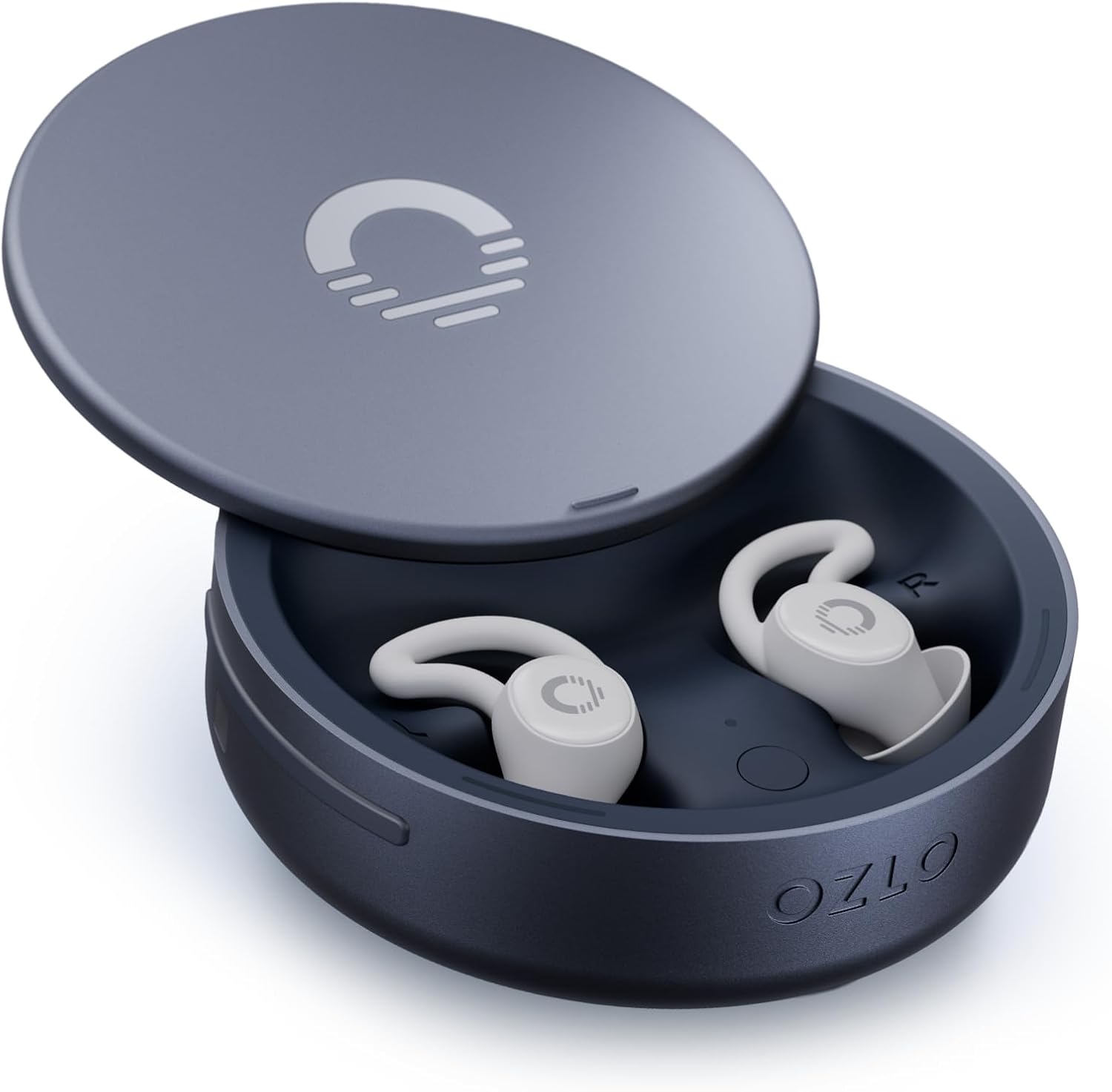 Visit on Amazon →.
How I test earbuds
Five checks, and none of them come off the box.
First, the drain test at normal volume. Not maximum, not a lab bench. The volume I actually listen at while walking the dog, which is the number that decides whether a pair is useful.
Second, independent bud use. Each bud on its own, paired solo, because I did not know I needed this until I had it, and now I will not go back. One bud in while the other charges is how half my day works.
Third, the volume floor. How quiet does the quietest setting actually get? This is the check almost nobody runs and the one that ruins the most pairs. A bud whose minimum volume is still loud enough to blast my eardrums is a bud I cannot use at night, no matter what else it does right.
Fourth, fit, over two weeks of walks and workouts. Small ear canals, easy soreness, so "comfortable" has to mean it survived me and not just a reviewer with average ears.
Fifth, the annoyances: a dramatic power-on announcement, touch controls that do not respond so I grab my phone anyway, a case that needs charging every other day. None of that shows up in a spec sheet, and all of it shows up daily.
If you are buying any of the four pairs above, run those same checks in the first week, while you can still return them. That is what the return window is for.
What the spec sheet never answers
Fit is the first thing to go wrong and the last thing anybody mentions. Three of these four solve it differently: the wingtip on the Beats holds the bud with a stabilizer, the Galaxy pair relies on a conventional tip seal, and the Ozlo set goes flat for pillow contact. The Thunelec pair lives or dies on whether its tips suit your canal. Whichever you pick, the fit test is the test.
The volume floor is the second thing. Manufacturers brag about how loud a bud gets and never mention how quiet it goes, which is backwards for anyone who listens at night or in a quiet room. I check the minimum before I check the maximum, every time.
The charging case is the third. "Extends playtime" is marketing for "recharges the buds," and the math is simple: buds plus case equal the total, and the case is empty after a couple of top-ups. That is fine. Just do not let the language convince you the buds themselves last forever.
And the last one is category. A masking pair, a budget pair, a flagship pair, and an all-rounder pair are four different tools. Most people only need one, and the mistake is buying the wrong one and then blaming the earbuds.
Noise cancelling earbuds compared
| Product | Best for | What the name promises | What to verify first | Price |
|---|---|---|---|---|
| Visit on Amazon → Beats Fit Pro (1st Gen) |
Most people, most days | True wireless noise cancelling, sweat resistant, Apple and Android | Wingtip fit over two weeks of walks | Check current Amazon price |
| Visit on Amazon → Samsung Galaxy Buds 4 Pro (2026) |
Feature chasers and Galaxy owners | AI true wireless, 2026 model, black | Whether the extras run on your phone | $219.99 |
| Visit on Amazon → Thunelec Active Noise Cancelling Ear Buds |
The budget tier | Active noise cancelling, 48H, blue | Real battery drain at your normal volume | Check current Amazon price |
| Visit on Amazon → Ozlo Sleepbuds 2 |
Sleep and noise masking | Sleep earbuds, snoring and noise masking | Side-sleeping comfort on your own pillow | $279.00 |
That table is the short version. The long version is the one I keep in a spreadsheet, and the spreadsheet does not care about the marketing copy.
Should you buy the Beats Fit Pro (1st Gen)?
Yes, if your ear canals are the problem. The wingtip holds the bud in place with a stabilizer instead of pushing a tip deeper into your canal, and that is the only fit design that has ever worked for me. Add noise cancelling, sweat resistance, and Apple plus Android support, and one pair covers the gym, the commute, and a flight.
Verify the fit in week one. If it hurts, send it back, because no feature on the list is worth daily ear pain.
Should you buy the Samsung Galaxy Buds 4 Pro (2026)?
Yes, if you want the newest feature set and you already live in the Galaxy ecosystem. The AI language in the name only pays off on a phone that supports it, so check that before you spend flagship money.
If you are on an iPhone or an older Android, you are buying capability you cannot use, and a cheaper pair will serve you better.
Should you buy the Thunelec Active Noise Cancelling Ear Buds?
Yes, as the budget pair, with budget expectations. The 48H claim in the name is a claim, not a measurement, so run your own drain test at normal volume and check that each bud works solo.
If the volume floor is quiet enough for night listening, you got a good deal at this price. If it is not, that is the dealbreaker, and it is worth returning over.
Should you buy the Ozlo Sleepbuds 2?
Yes, if the problem is sleep and not music. These are for masking snoring and room noise, not for listening to your library on a walk.
Test the pillow first. A sleep bud that is comfortable for ten minutes in your hand tells you nothing about hour six on your side, and comfort is the entire product here.