I held onto a 3.5mm jack for years, and I have a drawer of dead adapters to prove it. Every one of them worked for a while and then quit, usually on a walk, usually in the rain. When the phone stopped playing along, I went wireless the way most people do: reluctantly, and after reading so many contradictory reviews that I ended up further down the rabbit hole than when I started. This budget wireless earbuds comparison is the version of that search I wish someone had handed me. Four pairs, four different jobs, and the same checklist I run on everything that crosses my desk in Nashville.
The short answer: the JLab Go Air Pop+ is the safest default here for most people, the HAOYUYAN pair is the one to look at if sweat and battery life are your priorities, the Awdio Bots Classic is the pick for small ears, and the Beats Solo 4 is a different animal, an on-ear headphone for anyone who does not want anything sitting inside their ear canal.
Everything below comes from what each listing claims and what I would verify before trusting it. The spec sheet never answers the questions that decide whether you keep a pair past week two, so I have flagged the claims worth checking.
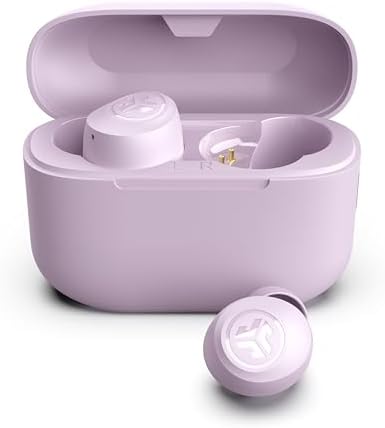
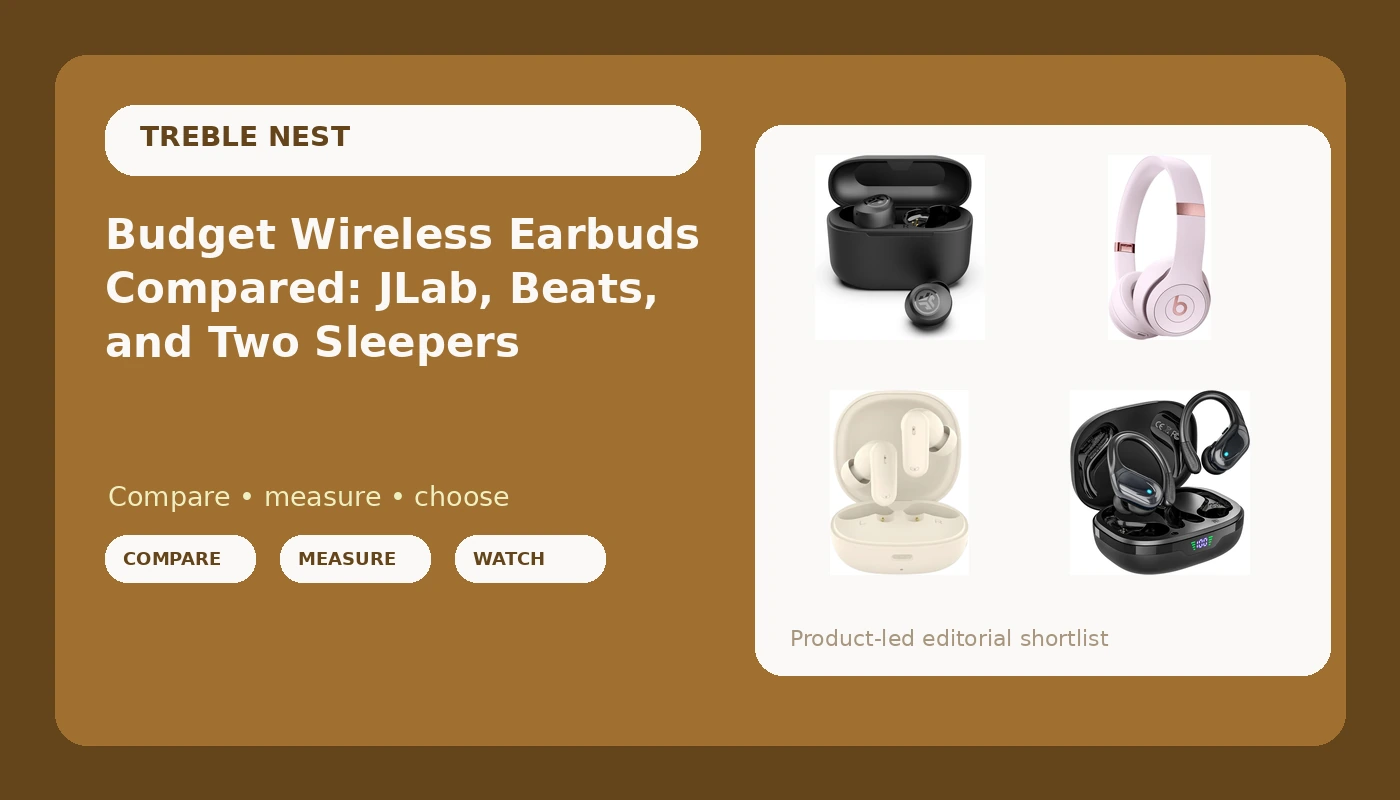
JLab Go Air Pop+ True Wireless Earbuds
Dual Connect lets either bud work alone, EQ3 gives you three sound profiles with no app, and 35 hours of claimed playtime covers a week of commutes
The 35-hour figure is a total across case recharges, not one charge, so a heavy listener still ends up tethered to the case
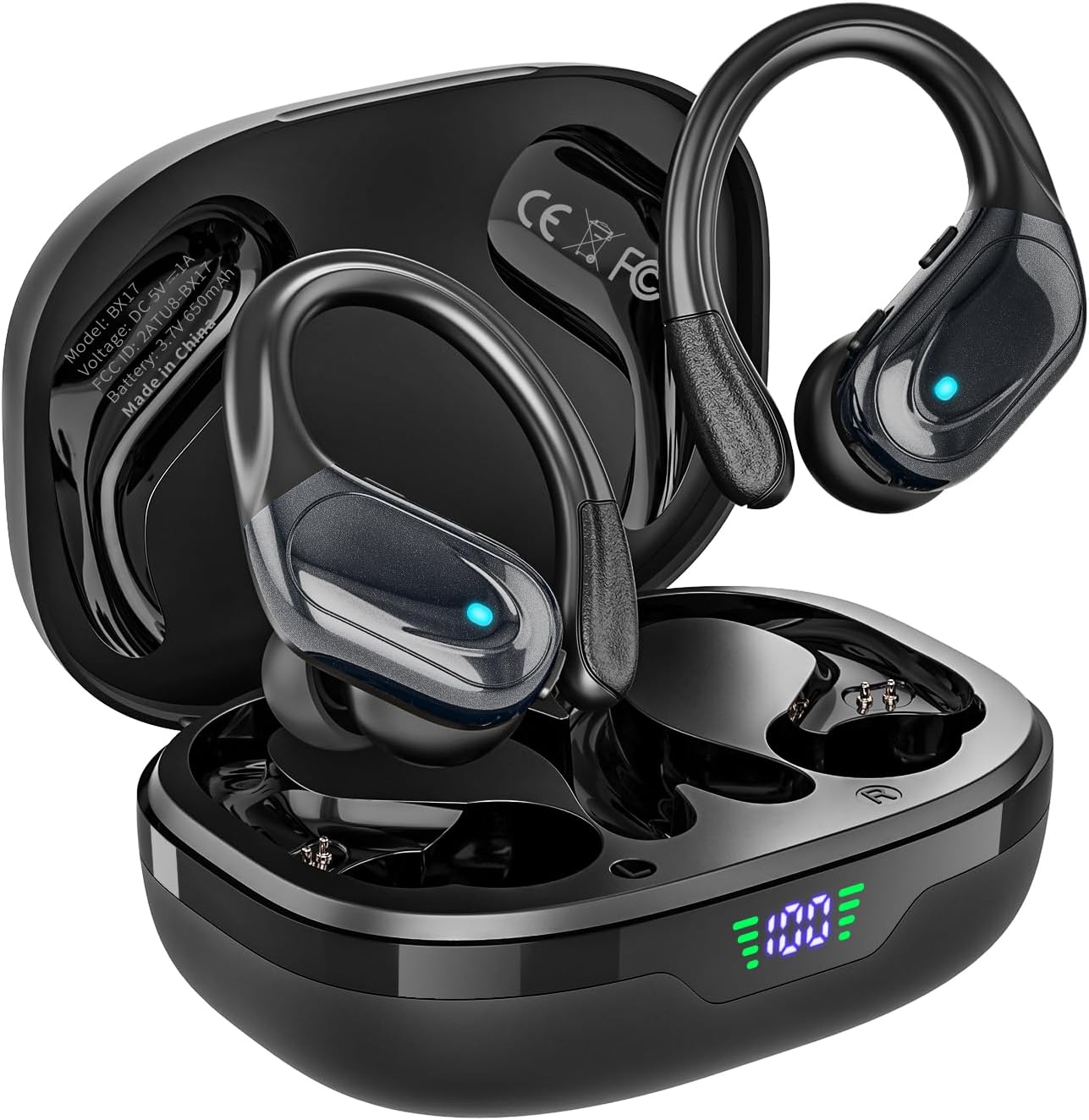
HAOYUYAN Wireless Earbuds
IPX7 waterproofing plus an 80-hour playtime claim makes this the obvious running and gym pick, and the LED power display takes the guesswork out of the case
"Noise canceling" in this bracket usually means call noise reduction rather than active cancellation, so verify before you buy it for plane noise
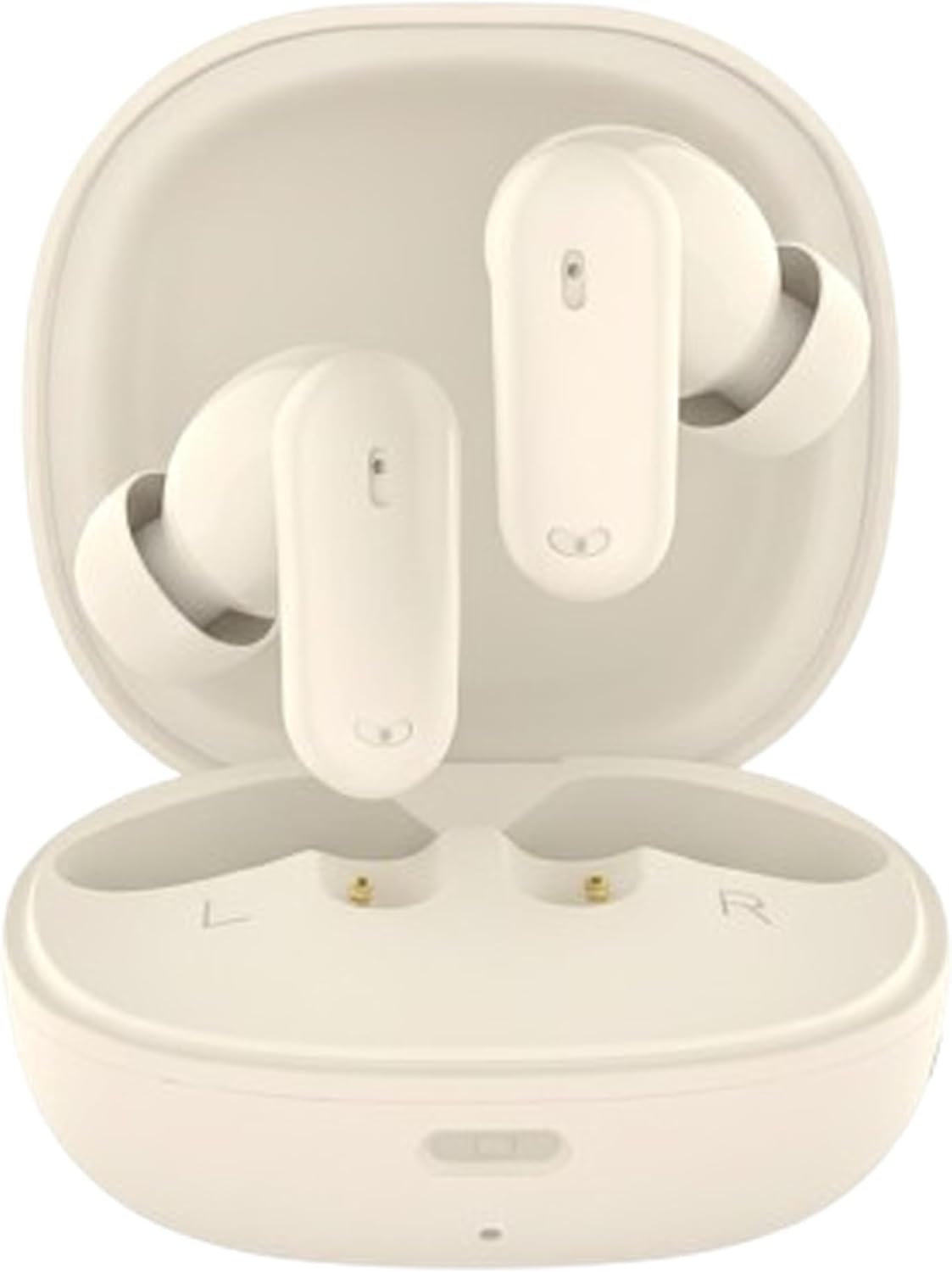
Awdio Bots Classic Series Wireless Earbuds
Built around a small, mini housing for small ears, with a modest and believable 7-hour figure and a USB-C case
7 hours per charge is the shortest number in this group, and a smaller housing usually means smaller drivers
Beats Solo 4 Wireless On-Ear Bluetooth Headphones
Up to 50 hours per charge, an ultra-lightweight on-ear fit, and compatibility with both Apple and Android
No in-ear seal and no waterproofing rating, so it is a commute and desk pair, not a gym pair, and it sits in a different price bracket entirely
Prices and availability were captured from Amazon Creators API and may change.
The checklist I run before I trust any pair
I do live sound and audio cleanup for a living, so my working hours belong to a pair of Sony over-ears that cost real money and never leave the desk. Everything else runs on cheap earbuds: walks, chores, the gym, the grocery store, phone calls from a loud street. My questions are not audiophile questions. They are survival questions, and they are always the same six.
Battery at normal volume. The number on the box is a best case, measured quietly and briefly. What matters is how long the pair lasts at the volume you actually listen at. A pair that dies after two hours is useless no matter how good it sounds, and a pair that dies after seven hours of honest use beats a pair that claims eighty and delivers four.
Independent use. Can each bud work on its own? I did not know I needed this until I had it, and now I will not go back to a pair that cannot.
The volume floor. How quiet is the quietest setting? If the minimum is still loud enough to blast my eardrums, the pair is useless for late-night listening, and no amount of bass makes up for it.
Fit, with the small-ear caveat. My ear canals are small and sore easily, so when I say a pair is comfortable, it means it survived me, not a reviewer with average ears. Tips in three sizes are a starting point, not a guarantee.
The power-on sound. A soft chime is fine. A voice announcing itself like an overenthusiastic receptionist is a dealbreaker.
The magic case math. "Extends playtime" means "recharges your buds." That is the whole trick. Read every battery number as buds-only or buds-plus-case, and treat the second one as a recharge schedule rather than a battery.
JLab Go Air Pop+: the safe default
The JLab Go Air Pop+ is the one I would hand to someone who just wants earbuds that work. The listing claims 35 hours of playtime, a USB-C charging case, Dual Connect so each bud can pair and play independently, and EQ3, which is JLab's built-in three-preset EQ you cycle through without downloading an app. That last detail matters more than it sounds. Half the budget pairs I have tried hide their only useful feature behind a companion app that wants an account and a firmware update before it will do anything.
Dual Connect is the feature I would pay for on its own. Using one bud at a time is how I get through a full day of calls and chores without ever thinking about battery, and it is the difference between a pair that lives in my pocket and a pair that lives in a drawer.
What to check before you commit: whether the 35-hour figure is the buds alone or the buds plus case recharges, how the volume floor behaves at night, and whether the power-on sound is a chime or an announcement. Those three things decide whether a fine pair becomes an annoying one.
HAOYUYAN: the workout pick
The HAOYUYAN pair is aimed at a specific person, and it says so in the name: sports, running, workouts. The two claims that matter are IPX7 waterproofing and 80 hours of playtime, backed by an LED power display on the case so you can see the charge level without guessing or opening an app. IPX7 is the real headline. Sweat and rain kill more cheap earbuds than anything else, and a rating that survives a dunk is a genuine advantage over a pair with no rating at all.
The 80-hour claim needs the same reading as every other battery claim in this bracket. If that is the total including case recharges, the honest per-charge number is a fraction of it, and the LED display becomes the thing you actually rely on. It is still a lot of listening between wall outlets, and for a gym pair that lives in a bag, that is the point.
The claim I would slow down on is "noise canceling." In this price range it usually describes environmental noise reduction on the microphone during calls, not active cancellation of the room around you. Call clarity on a noisy street is genuinely useful and worth having. It is not the same as quieting a plane cabin, so buy it for the sweatproofing and the battery, and treat the cancellation language as a bonus if it turns out to be more.
Awdio Bots Classic: the small-ear pick
Most earbud listings treat fit as an afterthought, which is why my ears have spent years being angry at gear that was designed for someone else's canal. The Awdio Bots Classic is the one pair here that puts small ears first: a mini housing, a "comfortable fit for small ears" claim, and a cream finish that will not disappear into a black backpack.
The battery number is 7 hours, which is the shortest in this comparison and also the one I trust most. Seven hours per charge is a believable figure for a small bud, and a smaller housing physically cannot hold the cell that an 80-hour claim implies. If you want one honest number instead of a big one, that is the trade. The USB-C case keeps the charging situation simple, and the school-oriented positioning tells you the intended use: long days, lecture halls, study sessions, and a bag pocket.
The trade-off to accept is driver size. A mini housing means less room for the driver, so expect a lighter low end than the larger in-ears here. For podcasts, calls, and background music, that is fine. If you want thump, this is not the pair for you, and no amount of tip swapping will change it.
Beats Solo 4: the on-ear outlier
The Beats Solo 4 is not competing with the other three, and pretending otherwise would be dishonest. It is an on-ear headphone, not an in-ear bud. The listing claims up to 50 hours of battery life, an ultra-lightweight build, powerful and balanced sound, and compatibility with both Apple and Android. The Cloud Pink finish is a choice you either want or you do not.
The reason to consider it at all is the fit category. If in-ear buds hurt your canals, an on-ear headphone takes the pressure off entirely, and 50 hours per charge means you can leave the charger at home for a week. Ultra-lightweight matters here, because on-ear designs clamp, and clamping is what makes people take headphones off after an hour.
The trade-offs are real. There is no in-ear seal, so you get no passive isolation from the room, and no waterproofing rating is mentioned, which makes it a commute, office, and desk pair rather than a gym pair. It also sits in a completely different price bracket from the other three, so the comparison is less "which is better" and more "which kind of listening are you doing."
The trade-offs the table cannot hold
In-ear versus on-ear is the biggest fork. The three in-ears sit inside the canal, which gives you isolation and a stable fit for movement, and demands that your ears tolerate tips. The Beats sit outside the canal, which removes tip pressure and removes isolation along with it.
Waterproofing is not evenly distributed. Only the HAOYUYAN pair claims an IPX7 rating. If your earbuds live in a gym bag or a sweaty pocket, that one line in the listing outweighs a lot of marketing copy.
Battery claims need translation. Seven hours per charge, 35 hours total, 80 hours total, and up to 50 hours per charge are four different measurements wearing similar clothes. Normalize them before you compare, or you are comparing the size of the font.
Call quality is where cheap pairs quietly fail. The HAOYUYAN listing mentions noise canceling, which in this bracket usually refers to microphone noise reduction. If you take calls on a busy street, that is the feature to care about, and it is worth reading the reviews that specifically mention callers hearing you.
Fit is the spec nobody lists. Two of these four pairs advertise fit as a feature. That is unusual, and it is the reason both are in this comparison at all. A pair that hurts is a pair you stop using, no matter what the frequency response says.
Which one fits which person
If you want one pair to cover commutes, calls, and chores with the fewest surprises, the JLab Go Air Pop+ is the safest default, mostly because Dual Connect and EQ3 solve real daily problems without an app.
If your listening happens while moving and sweating, take the HAOYUYAN pair and let the IPX7 rating and the LED case display do the work.
If your ear canals are small and everything else has hurt, start with the Awdio Bots Classic and accept the lighter bass and the 7-hour charge as the price of a fit that does not fight you.
If you want nothing inside your ear at all, the Beats Solo 4 is the only pair here that solves that problem, and the 50-hour claim means the trade is isolation and waterproofing rather than battery anxiety.
What I am checking next
Every pair that lands on my desk goes through the same gauntlet: battery drain at normal volume, each bud solo, the volume floor, and a two-week fit test on walks and workouts. Box numbers are claims until my own drain test says otherwise, and the volume floor is the spec that quietly decides whether a pair gets used at night or gets retired to a drawer.
Whichever of these you pick, run the cheap tests first. Pair one bud alone and see if it holds. Drop the volume to minimum and see if it is quiet enough for a quiet room. Wear them for a full errand before the return window closes. That is thirty minutes of work, and it tells you more than any spec sheet, including this one.