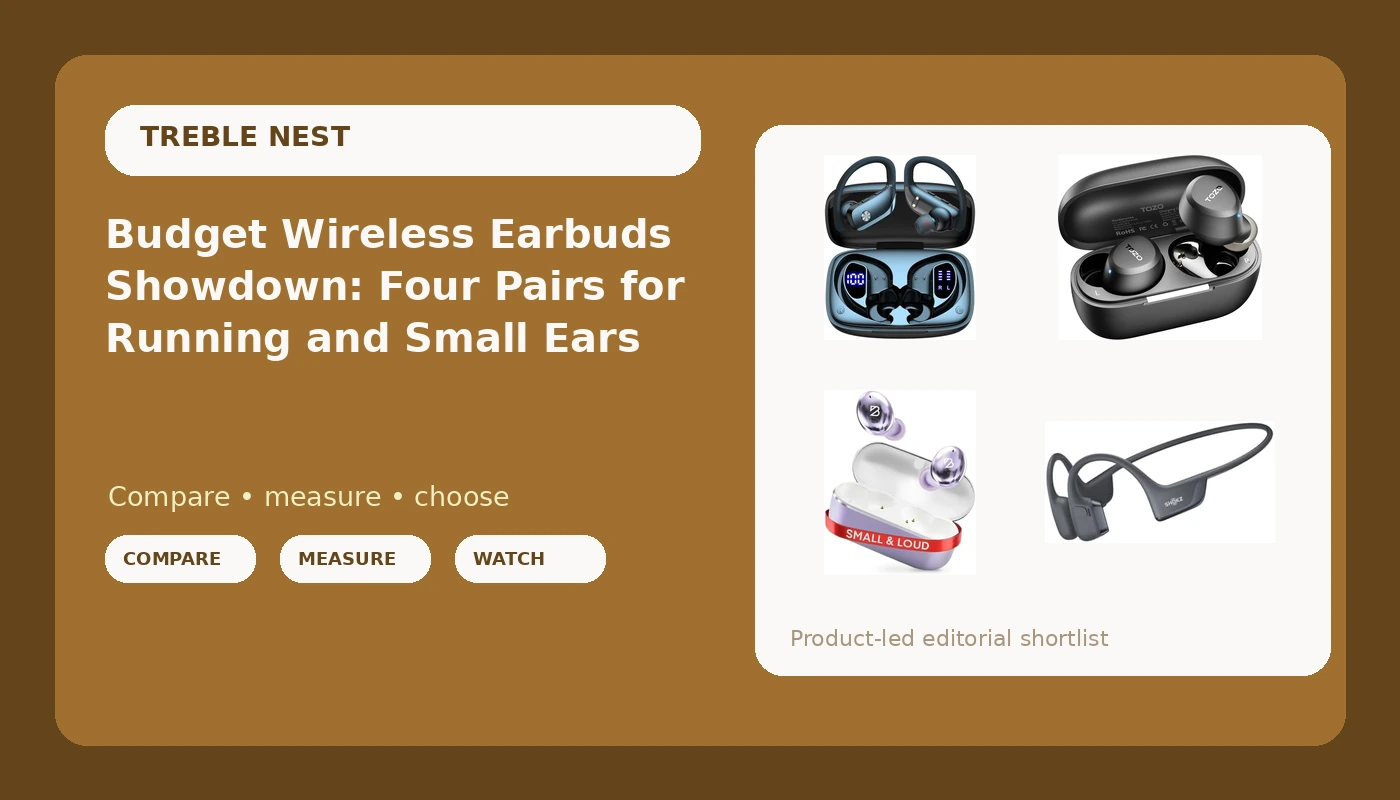
I have bought the same pair of budget wireless earbuds three times. Lost one after a year, lost another after a year and seven months, and both times it stung like a small bereavement. I would buy a fourth tomorrow. That is my entire position on cheap earbuds: not magic, not audiophile, just gear that works every day until you leave it on a plane.
I do live sound and recording cleanup around Nashville, so there is a proper pair of over-ears on my desk for work, the kind that costs real money and never leaves the house. Everything else, walks, the gym, dishes, the grocery run, runs on something cheap. For years I refused to give up the 3.5mm jack on principle. Then the phone stopped accepting connectors, the adapters died one at a time, and I made peace with wireless.
The frustrating part is choosing. Reviews contradict each other, one person calls a pair muddy and the next calls it punchy, and you go down the rabbit hole and come out more confused than when you started. So instead of another pile of adjectives, here is a comparison built on the things that actually decide whether you keep wearing a pair: battery life, whether each bud works on its own, how quiet the quietest volume goes, whether the fit survives your ears, and whether anything shouts at you when it powers on. That is the test, and no spec sheet answers it.
If you run on roads and need to hear traffic, the bone conduction pair is the only real answer here. If your ear canals hurt with everything, pick the pair built for small ears. If you just want the least money spent on something that works for walks and calls, start with the cheapest of the four.
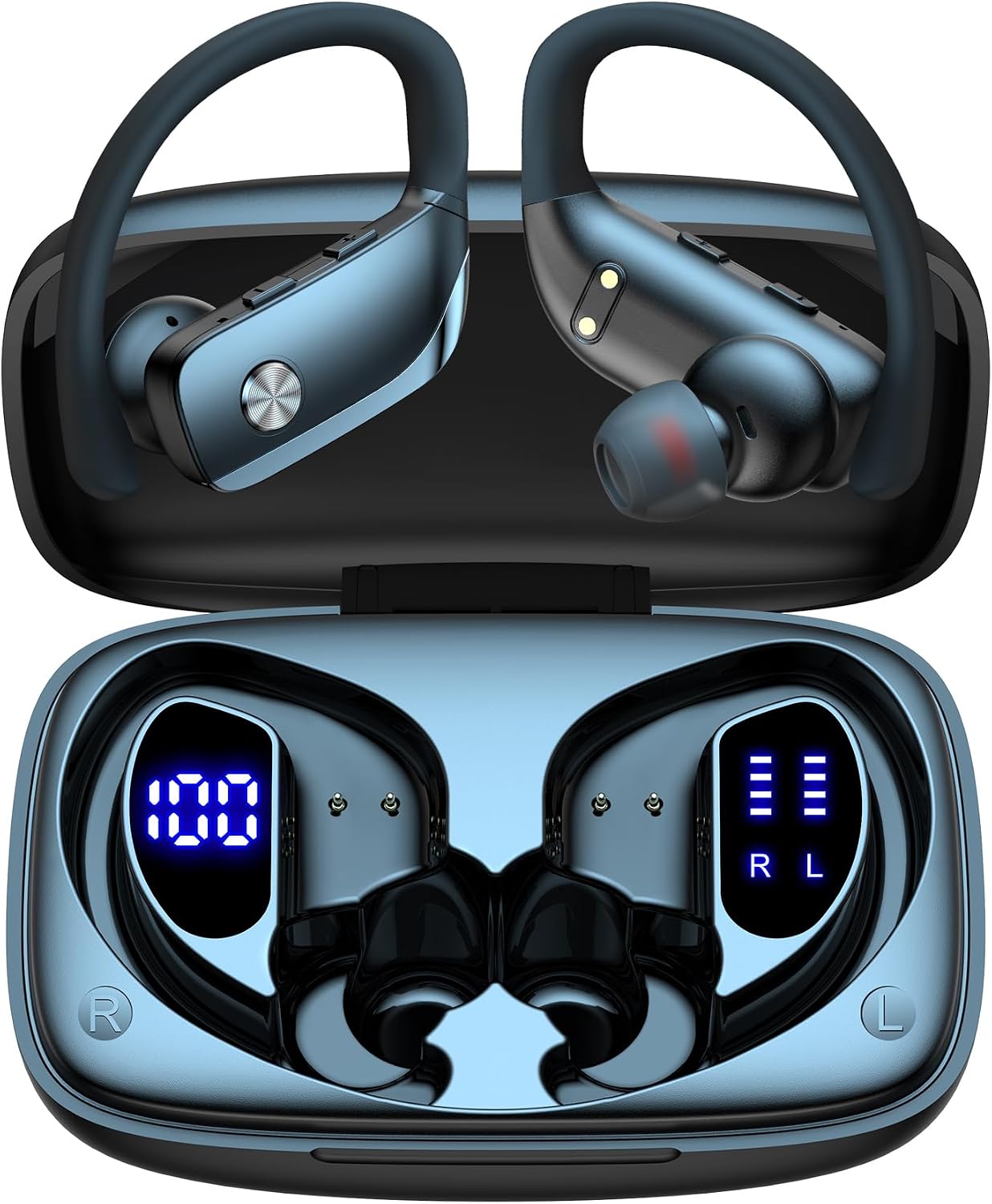
bmani Ear Buds Wireless Earbuds
Over-ear hook plus physical buttons stay put during a workout, and the LED case shows charge at a glance
The playtime headline is tied to the case, so the single-charge number needs a closer look
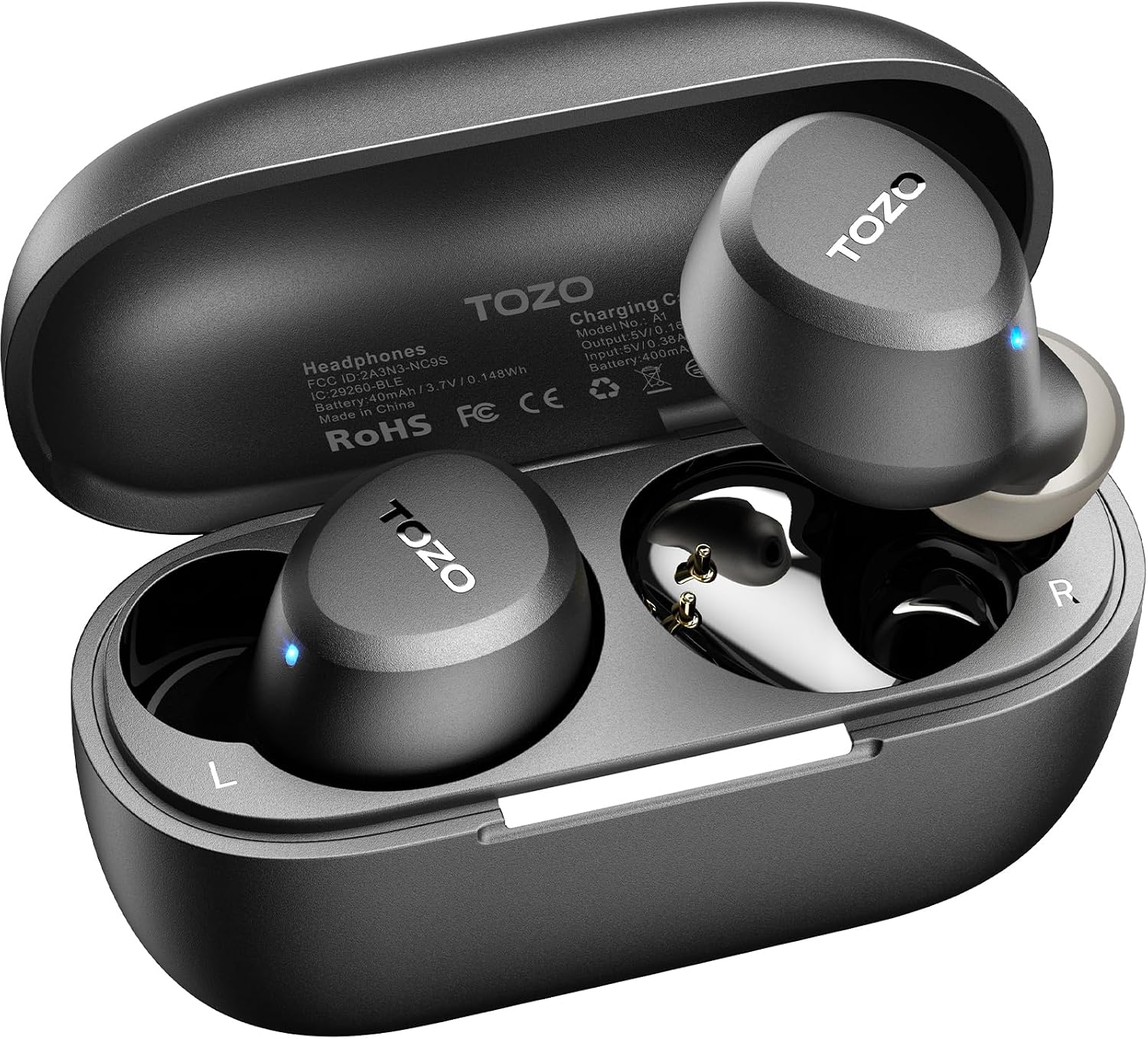
TOZO A1 Wireless Earbuds
Bluetooth 5.3 and a light in-ear shell with no gimmicks attached
No hook or wing, so fit rests entirely on the tips and your canal shape
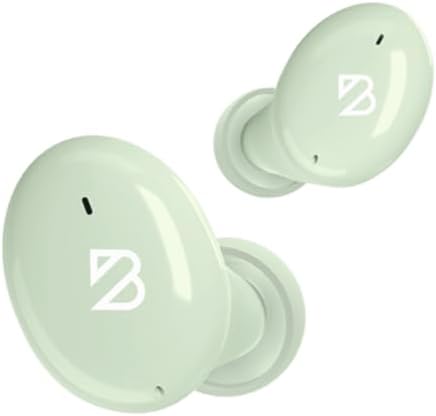
Back Bay Audio Mini Wireless Earbuds
Shaped for small ears, which is rare and, for some of us, the only thing that matters
A smaller shell means less room for battery and less sealing surface
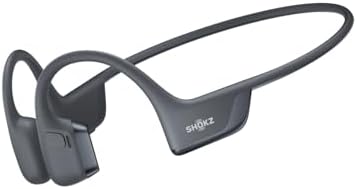
SHOKZ OpenRun Pro 2 Bone Conduction Sport Headphones
Leaves the ear canal completely open, so traffic and conversation stay audible
You trade bass and isolation for that openness, and it is priced like sport equipment
Prices and availability were captured from Amazon Creators API and may change.
How I sort this tier
Battery first. A pair that dies after two hours is useless no matter how good it sounds, and the number on the box is usually the most optimistic reading possible. What I want to know is how long a single charge lasts at normal volume, not at some laboratory whisper.
Independent bud use second. I did not know I needed it until I had it. One bud in while the other charges, one bud in for a call while I am cooking, one bud in because I lost the other one on a walk. A pair that cannot do that is a pair I stop carrying.
Volume floor third. My ears are sensitive and my listening happens late at night, so the minimum setting matters as much as the maximum. If the quietest step is still loud enough to blast my eardrums, the pair is dead to me regardless of everything else.
Fit fourth, and for me it is really first. I have small, easily sore ear canals, and almost everything hurts eventually, no matter the tip size or material. When I say a pair is comfortable, I mean it survived my ears, not just a reviewer's afternoon.
And then the small stuff that quietly ruins good hardware: touch panels that ignore you, dramatic power-on announcements, and charging cases marketed as if recharging were a feature. I will not pretend a spec sheet answers any of these questions. What I can tell you is what each of these four designs is built to do, and where each one tends to let people down.
Bone conduction: SHOKZ OpenRun Pro 2
The SHOKZ OpenRun Pro 2 Bone Conduction Bluetooth Sport Headphones is the odd one out, and the only pair here that puts nothing inside your ear canal. It sits against your cheekbones and sends sound through them, which leaves your canals open to the world. For anyone running on roads, that is not a gimmick, it is the entire point. You hear the car before you see it, and you can hold a conversation at the mailbox without pulling anything out.
The cost is bass. Bone conduction cannot move air the way a sealed in-ear can, so the low end is thinner and there is no isolation at all. On a treadmill that is fine. On a noisy flight it is close to useless. I also think this is the design you buy when fit has already failed you everywhere else, because nothing pressing inside the canal means nothing to irritate over a two hour walk.
The over-ear band is the other half of the argument. Stability without tightness is worth more for sport than any frequency response graph, and this is the pair I would hand a cyclist without a second thought.
The over-ear hook: bmani Ear Buds
The full name is a mouthful: bmani Ear Buds Wireless Earbuds Bluetooth Headphones with 80H Playtime LED Display Case, Over-Ear Hook with Mic, Stereo Sound, Easy Button Controls, Sports Earphones for Running Workout Gym Black. The idea is simple. In-ear buds with a hook that wraps over the top of your ear so they cannot drop out mid-sprint.
Two details stand out. First, physical buttons instead of touch panels. Unresponsive touch controls are one of my standing complaints, and a button you can press through a sweaty run without looking is worth more than a page of specifications. Second, the LED display on the case. Seeing the actual charge level instead of decoding a blinking dot is a small daily win.
Now the number in the name. When a big playtime figure is attached to a charging case, it is usually a total that includes recharges, not the hours you get from one charge of the buds themselves. That is the magic case language I complain about, and it is exactly why you check the single-charge figure separately before you buy. None of this makes the pair bad. It just means the headline number is doing more work than the battery is.
The cheap baseline: TOZO A1
The TOZO A1 Wireless Earbuds Bluetooth 5.3 Light Weight in Ear Headphones is the no-frills entry. Bluetooth 5.3, a light in-ear shell, no hook, no display, no theater. This is the tier where I have spent the most money over the years, because it is the tier that either just works or annoys you every single day, with very little in between.
At this level my checklist is short. Does each bud work on its own. Does the connection hold when the phone is in my back pocket and I turn my head. How quiet does the volume actually go. Does anything shout at me at power-on. Those four questions decide more of my daily happiness than driver size ever will. Bluetooth 5.3 is the current baseline for stability and power efficiency, so the radio side here is the right generation rather than last year's leftovers.
Where it can lose: there is no wing and no hook, so fit rests entirely on the tips and the shape of your canal. If your canals are small or slippery, this is the shape that starts to ache or work loose on a long walk. Buy it knowing that, and buy it for the simplicity.
Small ears: Back Bay Audio Mini
The Back Bay Audio Mini Wireless Earbuds for Small Ears, Award-Winning Sound is aimed squarely at the problem I have lived with for years. Small canals that get sore no matter which tip I try. A body designed around a smaller shell is not a marketing angle to me, it is the difference between wearing a pair and leaving it in a drawer next to three others that hurt.
The trade is physics. A smaller shell has less room inside for a battery and less surface to seal against, so expect shorter runtime per charge than a full-size pair and less isolation than a deep-seated design. That is not a defect, it is the price of the shape, and for anyone whose ears have rejected everything else it is a price worth paying.
Ignore the award language as a buying reason. Awards are not a specification. What matters is whether the shell sits in your ear without pressure, whether each bud works independently, and whether the quietest volume is quiet enough for a podcast in bed.
The trade-offs nobody puts on the box
Open versus sealed is the first fork. The bone conduction pair keeps you aware of the world and gives up bass and isolation for it. The two in-ear designs give you the low end and the quiet, and take away your awareness of traffic. Neither is better. They are different jobs, and picking the wrong one is the most common mistake I see people make in this tier.
Hook versus plain in-ear is the second. A hook or an over-ear band buys stability, and stability is what keeps earbuds alive, because the pair that falls out on a run is the pair that ends up under a car seat. A plain in-ear shell lives or dies on tips, which is fine for average canals and miserable for small ones.
Buttons versus touch is the third, and it is the one reviewers skip. Touch panels look cleaner and frequently ignore you, which means you pull out your phone anyway. Buttons look dated and work every time, including with gloves and sweat. I know which one I want at mile three.
Case math is the fourth. A charging case recharges. That is the entire feature. When the marketing turns recharging into "extends playtime," people start believing in a battery that does not exist, and then they are disappointed when a long flight kills the buds halfway through. Read the single-charge figure, ignore the combined one, and you will never be surprised.
And the volume floor is the fifth, the one nobody tests until they are lying in bed at midnight with a podcast that sounds like a concert. Minimum volume is a real specification. Treat it like one.
What I would actually pick
For road running and cycling, the bone conduction pair, without hesitation. Hearing the world around you is not a compromise, it is a safety feature, and the open canal means nothing to irritate on a long effort.
For the gym, the bmani pair. Hooks, buttons, and a case you can read at a glance are the right priorities for lifting and intervals, and the hook design is the one that survives being yanked out of your ears by a barbell.
For walking, chores, and calls with average ears, the TOZO A1 is the straightforward answer. Bluetooth 5.3, light, no gimmicks, nothing to learn.
And for small, sore canals, the Back Bay Audio Mini, because a pair that fits is a pair you actually use, and a pair you actually use beats a pair with better specs sitting in a drawer.
I will say the thing I always say. In this tier, "fine" is the highest praise there is. Gear that just works, day after day, without hurting you or shouting at you, is worth more than anything that impresses on paper. Check the single-charge battery figure, check whether each bud works alone, check the volume floor, and then stop reading reviews, including this one, and go listen to something.