
Related: Earbud Fit Guide: Ear Tips That Stay Put and Stop Hurting
Small ear canals and a small budget taught me more about headphones than any spec sheet ever did. I do live sound work around Nashville, running monitor mixes in small rooms and cleaning up podcast audio, so my reference pair stays at home and costs real money. Everything else, the walks, the chores, the gym, the grocery store, runs on cheap gear. That is the version of this hobby I actually live in, and it is why I keep writing about budget earbuds for small ears.
Let me get the snob position out of the way first. Wired still sounds better than wireless. I believe that, I own that opinion, and I also own a drawer of dead 3.5mm adapters that each worked for a while and then did not. The phone moved on and the adapters die on you, so wireless is the practical reality. Make peace with it. If you still have a jack, great, one of the four pairs below is for you.
The rest of this is the checklist I run before I would spend my own money: battery at normal volume, whether each bud works alone, how quiet the quietest setting actually gets, and whether the shape survives a two hour walk without making my canals ache. Fit beats frequency response. If it hurts or falls out, nothing else about it matters.
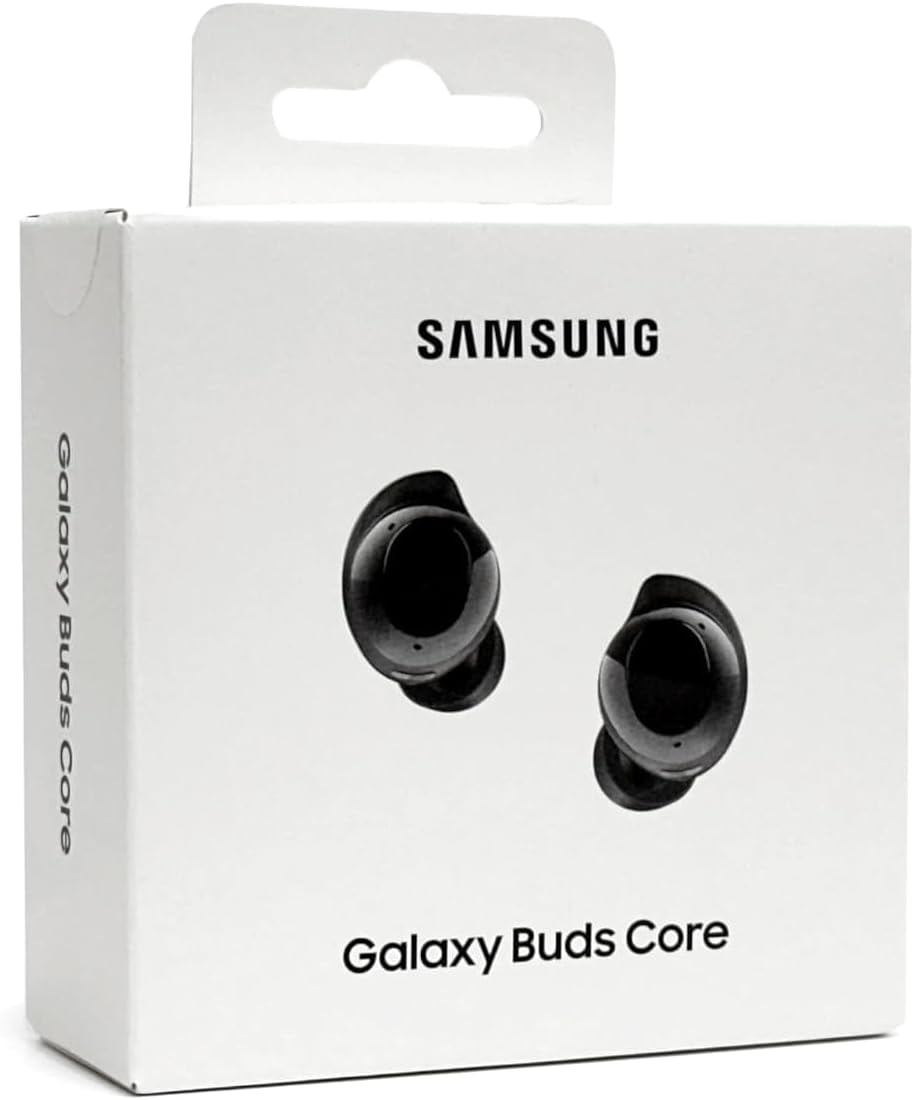
Best Overall for Most People: Samsung Galaxy Buds Core
This is the pair I would hand to most people first. Bluetooth 5.4 is the current generation of the radio, and newer Bluetooth generations have mostly meant steadier connections and fewer dropouts in my experience, which matters more than any codec logo. Active noise cancelation is on board, and the listing claims up to 35 hours of continuous music playback.
That 35 hour figure is the number I would verify first. Battery is the first spec to check and the first spec to disappoint. A pair that dies after two hours is useless no matter how good it sounds. "Continuous" is the word I like here, because a big number that only exists when the case is recharging your buds is not the same thing as a big number in the buds themselves.
The catch is in the listing itself. This is Latin American stock, and that is spelled out rather than buried. Read the seller and support details before you click, because that is the kind of thing that decides whether a warranty conversation is easy or miserable. If the seller details look clean to you, this is the safest all-rounder of the four.
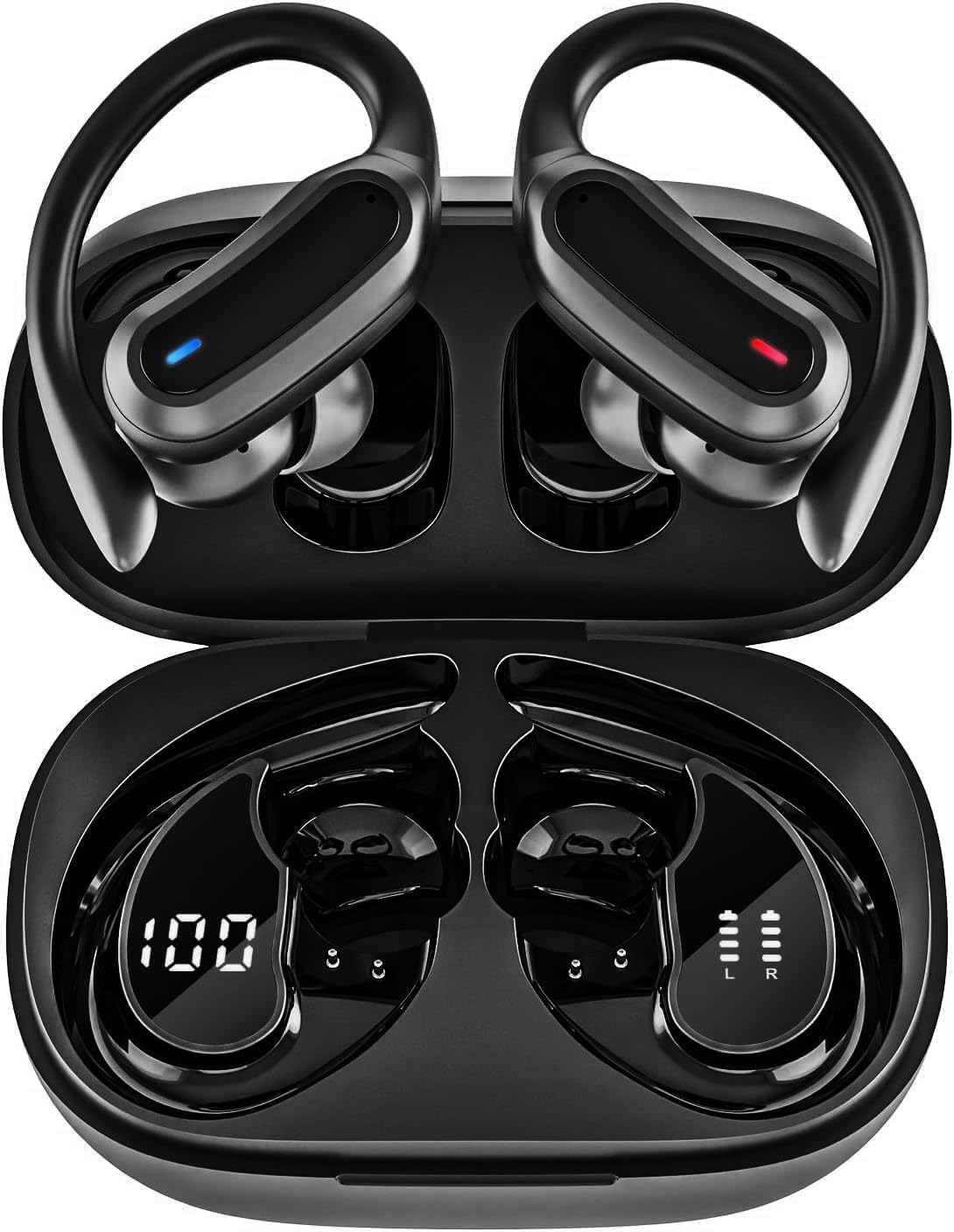
Best for Running and Sweat: the Earhook Sport Pair
Everything about this listing is aimed at movement. Earhooks, an over-ear bud shape, IPX7 waterproofing, a 54 hour playtime claim, ENC noise cancelling for calls, and an LED power display on the case. If your earbuds have ever popped out on a run and bounced into a storm drain, you already understand why the hook exists.
IPX7 is the rating I look for in workout gear, because it means sweat and rain are not a concern and a dropped bud in a puddle is survivable. ENC on the microphone side is about pulling your voice out of traffic noise on calls, which is the difference between a usable call and a caller who keeps asking you to repeat yourself. The LED display is a small thing that saves a lot of guessing.
Two things to test before you trust this pair. First, the volume floor. Minimum volume still loud enough to blast my eardrums is a dealbreaker, and it is the spec nobody prints. Second, the hooks themselves. Hooks solve falling out, but on small ears they can also press in ways a plain bud does not, so give them a long walk before a long run.
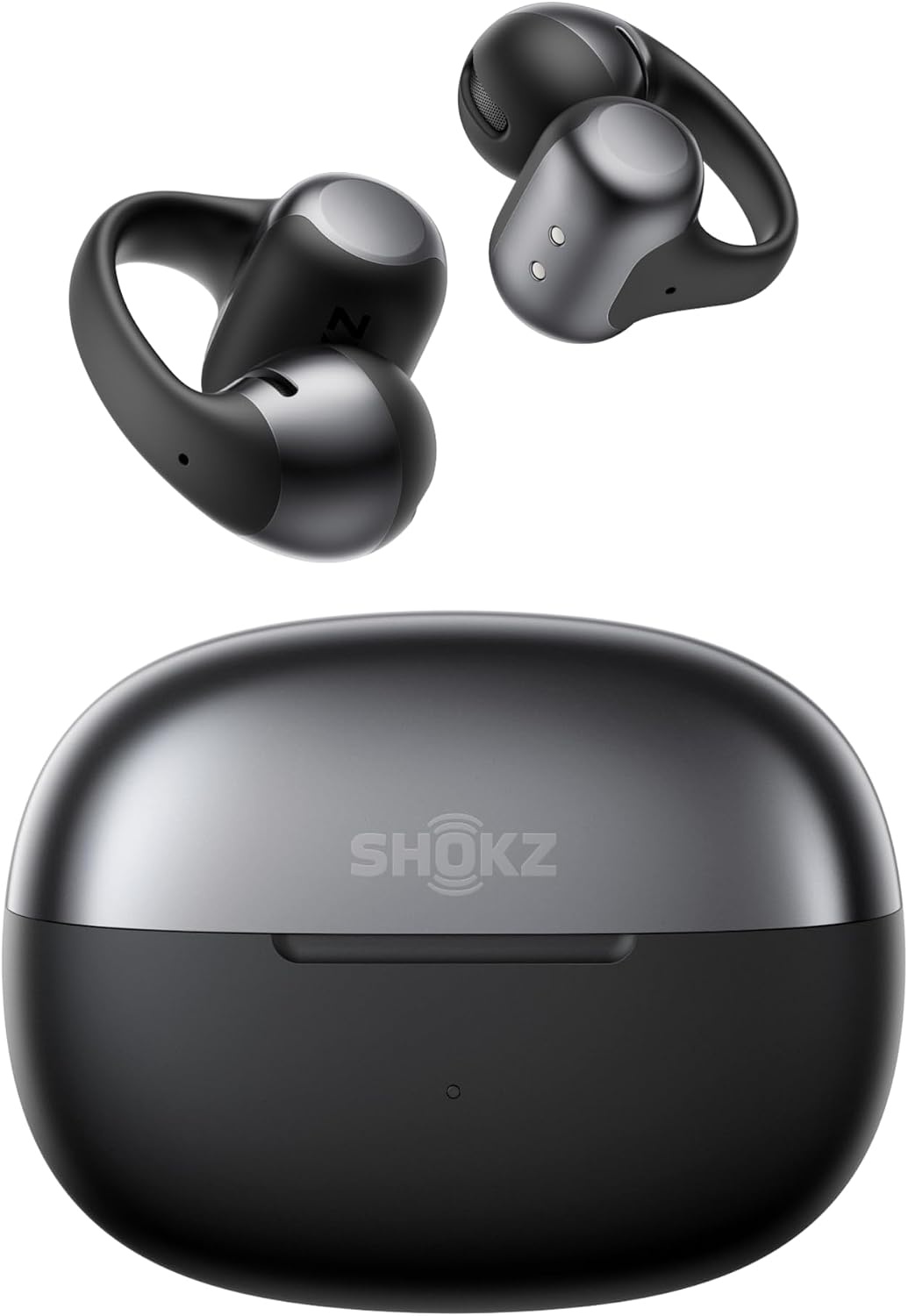
Best for Sore Ear Canals: SHOKZ OpenDots ONE
Open-ear clip-on buds were my compromise for years, and I got tired of pretending they sounded as good as in-ears, but I never got tired of the comfort. Nothing goes inside the canal. The bud clips on and fires sound at your ear from the outside. For anyone whose canals ache with every tip size and every material, that is not a small feature, that is the whole reason to buy.
Dolby Audio processing is part of the spec here, and open designs lean on that kind of tuning because they lose so much low end to the physics of not sealing your ear. Expect a lighter bass than the Galaxy Buds Core and far more awareness of what is happening around you. On a busy street or a bike path, that awareness is a safety feature. In a loud coffee shop, it is a limitation.
This is the most expensive pick of the four and the most specialized. If your problem is pain, this solves pain. If your problem is wanting to feel the kick drum on a walk, it does not, and no amount of tuning will change that.
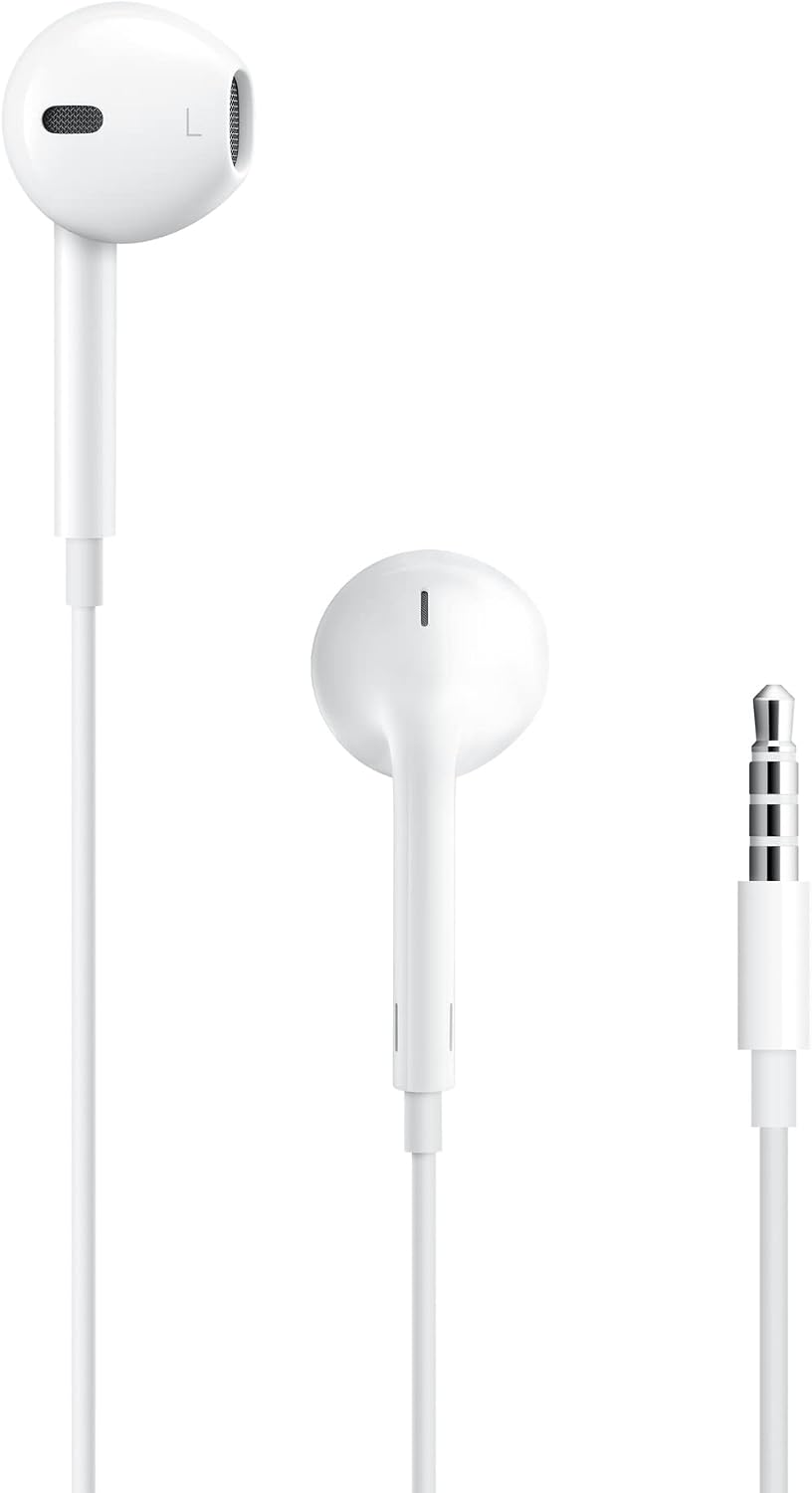
Best for the Wired Holdouts: Apple EarPods
Here is the wired exception, and I am glad it exists. A 3.5mm plug, a built-in remote for music, phone calls, and volume, and nothing else to think about. No charging, no pairing, no firmware, no voice announcing that it has powered on like an overenthusiastic receptionist. Plug it in and the audio is there.
For pure sound per dollar, nothing wireless in this group competes with a wired pair, because there is no battery, no radio, and no codec in the way. If you have a laptop, a desktop, an older phone, or a tablet with a jack, this is the low risk way to find out whether your ears tolerate a plain bud shape at all.
The honest limitation is the plug. If your phone is a modern one without a headphone jack, you are back in adapter territory, and adapters die on you. That is exactly how I ended up wireless. But for the desk, the plane, the keyboard, and the drawer of devices that still have a jack, these earn their place.
How I Judge a Budget Pair
Five questions, in this order. How long does the battery actually last at normal listening volume, not at the volume the marketing department used. Does each earbud work independently, because I did not realize I needed that until I had it and now I will not give it up. How quiet is the minimum volume setting. Do they survive a walk and a workout without hurting my canals. And is there anything obnoxious about living with them, like a power-on announcement at full volume or a charging case described as extending playtime when it is really just recharging.
That last one is my favorite piece of marketing nonsense. A charging case does not extend your battery life, it recharges your buds. Every pair with a case has one. When a listing sells the case like a magic feature, I read the rest of the listing more skeptically.
The volume floor is the one nobody tests and everybody should. A pair that sounds great and cannot get quiet is a pair you cannot use at night, on a quiet train, or next to a sleeping partner. I will trade a little bass for a volume scale that goes all the way down.
And fit is not a preference, it is a filter. Small canals, big canals, sore spots, earhooks, clip-ons: the shape decides everything else. A pair that hurts gets returned no matter what the frequency response looks like on paper.
What the Spec Sheets Actually Tell You
Bluetooth 5.4 on the Galaxy Buds Core versus older generations on other pairs is the kind of thing that shows up as fewer dropouts walking through a crowded intersection, not as a dramatic sound difference. Connection stability is the quiet spec. Nobody advertises it because nobody can photograph it.
Active noise cancelation and ENC are two different jobs. ANC is for you, cutting the room down so you can hear the music. ENC is for the person on the other end of the call, pulling your voice out of the street noise. A listing that mentions both is telling you it works in two directions, and calls are where cheap buds usually fall apart.
IPX7 on the earhook pair is a real rating with a real meaning, which is sweat, rain, and brief immersion. If you train hard, that is worth more than any tuning claim.
Open-ear versus in-ear is the decision that no spec sheet will make for you. In-ear seals, which gives you bass and isolation. Open-ear clips outside the canal, which gives you comfort and awareness. Neither is better. They solve different problems, and the person with sore canals should be honest about which problem they have.
The wired pair sidesteps all of it. No battery curve, no codec, no latency, no pairing dance. It is the control group for the whole comparison, and it is the reason I still keep a wired option in the rotation.
Budget Earbuds Comparison Table
This is the same table I keep when I am deciding what to carry. Specs come from the listings, and the watch-out column is the thing I would check first in the return window.
| Pair | Power | Fit | Best for | Watch out for |
|---|---|---|---|---|
 Visit on Amazon → Visit on Amazon →Samsung Galaxy Buds Core |
Up to 35h continuous playback, per listing | In-ear with active noise cancelation | Everyday listening and calls | Latin American stock, so read seller and support details |
 Visit on Amazon → Visit on Amazon →Earhook sport pair |
54h playtime claim, LED power display | Earhook, over-ear | Running, lifting, heavy sweat | Hooks can press on small ears, and the volume floor is unlisted |
 Visit on Amazon → Visit on Amazon →SHOKZ OpenDots ONE |
Wireless, no battery figure in the listing | Open-ear clip, nothing inside the canal | Sore ear canals, street awareness | Lighter bass, no isolation from noise |
 Visit on Amazon → Visit on Amazon →Apple EarPods |
None needed, wired | Standard bud with 3.5mm plug | Jack owners, zero latency, no charging | Requires a 3.5mm jack or a working adapter |
Should you buy the Samsung Galaxy Buds Core?
Yes, for most people, this is where I would start. Bluetooth 5.4, active noise cancelation, up to 35 hours of continuous playback on the listing, and a shape that suits everyday listening and calls. The one thing I would not skip is the seller detail, since the listing is upfront about Latin American stock and that affects how support works if something goes wrong. If that checks out, it is the least complicated good decision in this group.
Should you buy the earhook sport pair?
Yes, if your listening happens while you are moving and sweating. IPX7, a 54 hour playtime claim, ENC for calls, and earhooks that keep the buds attached to you instead of the pavement. It is the value pick for training. Give the hooks a two week fit test on walks before you trust them on a long run, and check the minimum volume early, because a pair that cannot get quiet is a pair I would send back.
Should you buy the SHOKZ OpenDots ONE?
Yes, if your ear canals have made every in-ear pair miserable. This is the pair that solves pain instead of pretending it does not exist. Clip-on, open-ear, Dolby Audio processing to make the most of a design that cannot seal. You are paying for comfort and awareness, and you are giving up bass and isolation. Know which of those two you need before you buy.
Should you buy the Apple EarPods?
Yes, if you still have a 3.5mm jack and you want the simplest possible path to decent sound. No battery to check, no pairing, no dropouts, no power-on announcement, and a built-in remote for music, calls, and volume. Wired still sounds better, and this is the cheapest way to prove it to yourself. Just do not buy them for a phone that does not have a jack unless you enjoy buying adapters twice a year.