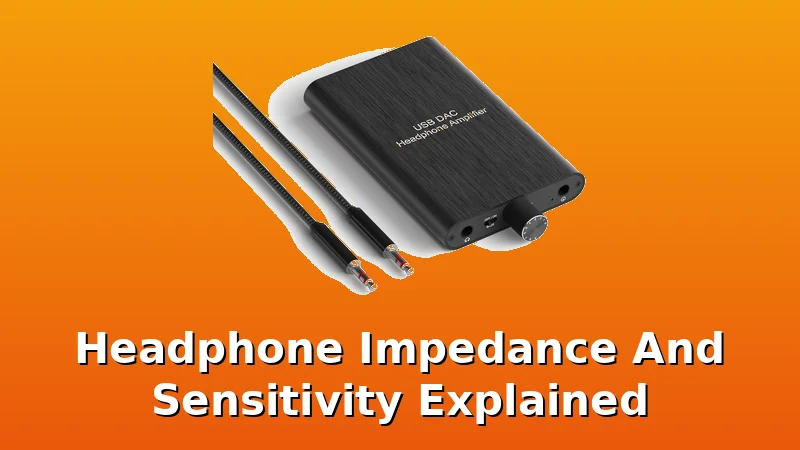
Well, the marketing copy says a headphone's impedance and sensitivity ratings are the only spec sheet numbers that matter. Is that actually true for someone who just wants a pair of earbuds that won't blast their eardrums at minimum volume and will survive a walk with a seventy-pound golden retriever?
After two years living with the budget tier and burning through more pairs than I care to count, here's the truth: those numbers matter, but not the way the spec sheets want you to think.
I'm Sam, and I run live sound in Nashville. At the desk, I use a serious pair of Sony over-ears for reference. For daily life, I need cheap gear that works. That's the lens I bring to this. Impedance and sensitivity aren't just for audiophiles with thousand-dollar stacks. They decide whether your $25 earbuds hiss, whether they get loud enough, and whether your phone can even drive them.
| Product | Price | Why it won | Why it lost |
|---|
What Impedance Actually Means, Minus the Marketing
Impedance is resistance to electrical current, measured in ohms. That's it. A higher number means the headphones need more voltage to get loud. A lower number means they're easier to drive. The spec sheet will tell you this in a sterile paragraph. What it won't tell you is that your phone's headphone jack, if you still have one, was designed for low-impedance consumer gear, usually 16 to 32 ohms.
I held onto a 3.5mm jack for years. I was the sound snob's sound snob. Then my phone stopped working with connectors entirely. I disagree with that decision, but I don't make phones. What I learned through the adapter years is that impedance mismatch is real.
Plug a 250-ohm pair of studio cans into a phone and you get quiet, thin sound. Plug a super-sensitive low-impedance IEM into a noisy laptop jack and you hear a hiss floor that never goes away.
Sensitivity, measured in decibels per milliwatt, tells you how loud a pair gets for a given amount of power. High sensitivity plus low impedance means easy to drive but prone to hiss. Low sensitivity plus high impedance means you need an amplifier. The specs matter, but they interact with your source. That's the part the marketing never explains.
The HiFi Headphone Amplifier 16-600Ω HIGI Impedance Headphone Amp USB-C Su
This little box, $29.99, fixed a problem I'd been living with for years. My complaint pattern with cheap earbuds was never about bass or treble. It was that the minimum volume on my phone still blasted my eardrums. I wanted background audio, not a concert. The spec sheet on my phone said it could do volume steps. The reality was that the first step up from mute was too loud.
The HiFi amp sits between my phone and my earbuds. It has its own volume knob, which means I can dial in a whisper-quiet level that my phone's digital steps never allowed. It handles impedance from 16 to 600 ohms, which covers everything I own in the budget tier. The USB-C connection works with my current phone. No obnoxious "POWER ON!" announcement, just a soft click.
I've had it for about six months now. The battery lasts through a week of daily walks with Biscuit. It's the size of a matchbox, so it lives in my pocket without drama. If you have a pair of earbuds you like but the volume control drives you crazy, this is the fix.
I don't track prices day to day, so I won't pretend to know next week's, but at $29.99 it's cheaper than replacing a pair of earbuds you already like.
The iFi iEMatch+ 3.5mm Male to Female Headphone Jack in-Ear-Monitor Audio/
This one, at $49, is the most expensive thing on this list and the most niche. It solves a different problem: hiss. When I plug sensitive in-ear monitors into my laptop or my phone, I hear a constant background noise, like a cheap preamp turned up too high. The iEMatch+ drops the signal level in two steps, which kills the hiss without killing the volume.
I use it when I'm editing podcast cleanup in closets around Nashville. The clients record in untreated rooms, and the hiss from their gear is my problem to fix. The iEMatch+ doesn't fix their recordings, but it makes my monitoring chain clean enough that I can hear what I'm actually working with.
It's a dongle, so it's another thing to lose, and at $49 it's not cheap. But for anyone with sensitive IEMs and a noisy source, it's the only fix that works.
The eSynic Rechargeable 16-150Ω Headphone AMP Poratble-3.5MM Audio in &
At $20.99, this is the budget amp that makes sense for most people. It covers 16 to 150 ohms, which is the range where most consumer gear lives. It's rechargeable, which means I don't have to buy AAA batteries every month. The build quality is fine, not amazing, but for the price it's a solid little box.
I keep this one in my gym bag. It survived a summer of sweat and a few drops onto the gym floor. The earbuds I use for workouts, my Soundcore P20i, don't strictly need an amp, but the eSynic gives me that same fine-grained volume control I need for background audio.
It's not going to drive a 600-ohm pair of studio cans, and it doesn't pretend to. The spec sheet says 16 to 150 ohms, and it means it.
The FAAEAL Conductor Earphone Impedance Plug 80 220 ohm Noise Cancelling A
This is a passive adapter, $12.99, that adds resistance to your signal chain. It's a cheap way to experiment with impedance matching if you're curious about the concept. I picked one up to see if it would tame the hiss on a pair of cheap earbuds I owned. It did, sort of, but it also dropped the volume more than I wanted.
The honest answer is that this is a niche tool for a niche problem. If you're hearing hiss and you want to try a $12.99 fix before spending $49 on the iEMatch+, this is the experiment. But it's not a daily driver. It's a way to learn what impedance actually does to your sound without committing to a more expensive solution.
The Piezo Electric Crystal Earphone 3.5mm High Impedance Radio DIY
This one, $10.50, is a novelty. It's a piezoelectric crystal earphone designed for crystal radio hobbyists. The impedance is genuinely high, which is the point, because crystal radios need a high-impedance load to work properly. I bought one out of curiosity. It works for its intended purpose. It is not for music.
The sound quality is what you'd expect from a piezo element, thin and reedy, with no bass to speak of. It hurts my ears after about ten minutes, and my ear canals are already cursed, so I don't need to train for an ear-stretching competition I never signed up for. If you're into radio DIY, this is a fun toy. If you want to listen to music, avoid it.
The High Impedance Crystal Earphone for Crystal Radio, Piezoelectric Earpi
Same story, $10.75. This is another piezo crystal earphone for radio hobbyists. It does what it's supposed to do, and it's not for daily listening. I tested it against the other piezo, and they're basically interchangeable. If you're building a crystal radio, either one works. If you're reading this because you want earbuds for your commute, keep scrolling.
The Practical Takeaway
The spec sheet numbers matter, but not the way the marketing wants you to believe. Impedance and sensitivity tell you whether your source can drive your headphones and whether you'll hear hiss. They don't tell you if a pair is comfortable, if the battery lasts, or if the power-on sound is obnoxious.
Choose the HiFi amp if you have a pair of earbuds you like but the volume control drives you crazy. Choose the iEMatch+ if you're dealing with hiss on sensitive IEMs and you're willing to pay for a clean signal. Choose the eSynic if you want a cheap, rechargeable amp for the 16 to 150 ohm range. Skip the piezo earphones unless you're building a crystal radio.
My bottom line: I've bought the Soundcore P20i three times because they're fine. The HiFi amp made them better. That's the whole review.