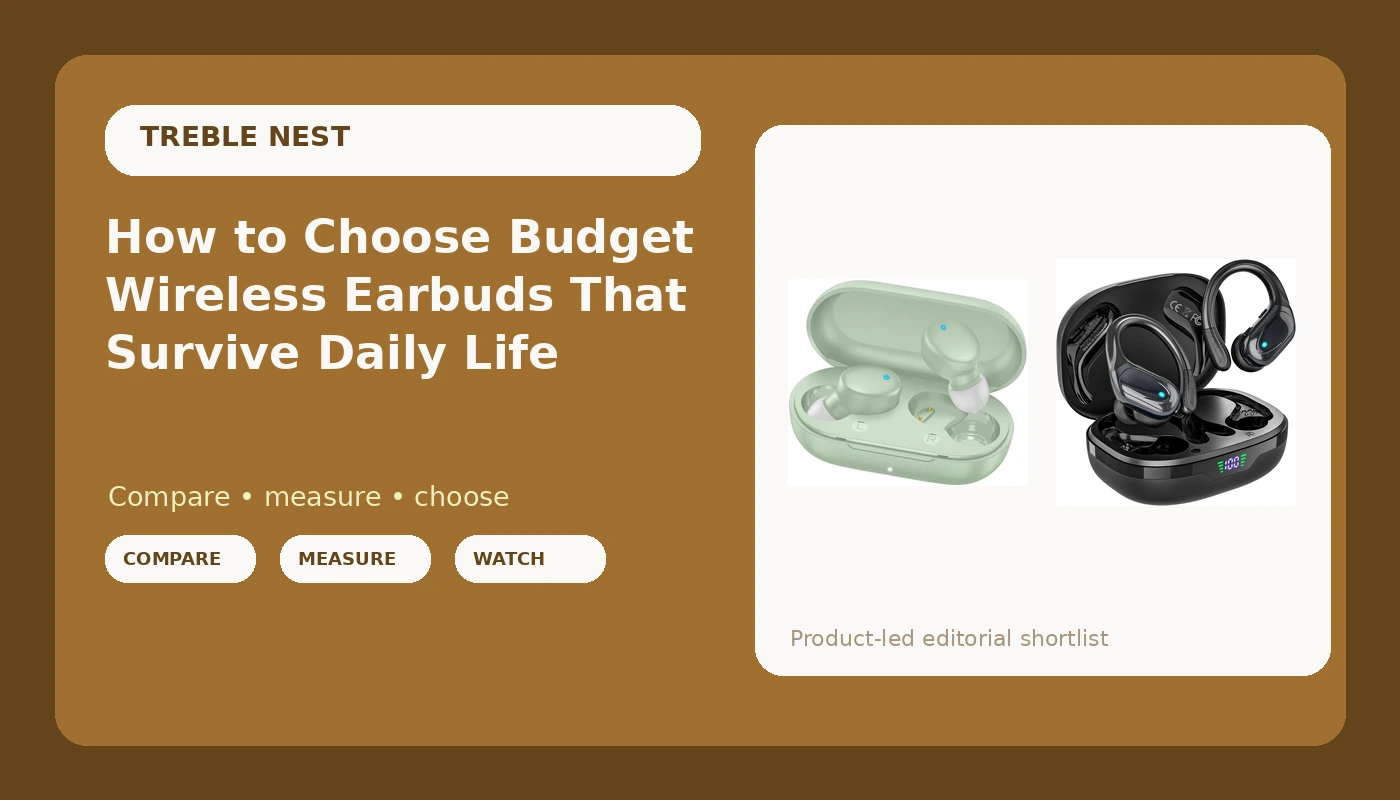
Budget wireless earbuds are where the money math gets strange. You can spend less than the cost of a lunch, and two listings will look nearly identical in the product photos. I do live sound and recording-editing work around Nashville, which means my reference pair is a set of Sony over-ears that never leaves the desk. Every other hour of listening, the walk, the gym, the grocery store, the dishes, happens on cheap earbuds, because those are the ones I am willing to lose.
I have lost them. I bought the Soundcore P20i three separate times, and I would buy a fourth if this pair walked off tomorrow. Along the way I went down the review rabbit hole more times than I want to admit, read a hundred reviews that contradicted each other, and learned that almost none of them answer the questions that actually decide whether a pair of budget wireless earbuds is worth keeping.
Those questions are boring. How long does the battery last at the volume you actually listen at? Does each bud work on its own? How quiet does the quietest setting get? Does it still feel fine in your ear after two weeks? Does it greet you with a dramatic POWER ON announcement like an overenthusiastic receptionist?
This is the how-to for all of it: how to pick, how to set up, and what to check before the return window closes.
Why you should trust me
I mix monitors in small venues and clean up podcast audio for a living, so I spend my days listening for problems in other people's sound. At the desk I use the serious pair, the ones that cost real money. For everything else I am a repeat buyer in the budget tier, and I have paid for every pair I have opinions about. Nobody sends me free earbuds.
I also have small ear canals that get sore fast. Every pair hurts eventually, so when I say a set is comfortable, it means it survived my ears over weeks, not that it felt fine for ten minutes. That constraint drives most of what follows, because fit beats frequency response. If it hurts or falls out mid-walk, nothing else about it matters.
How I picked the two pairs below, and what I check first
Two pairs made the cut here, and they sit at the two ends of the budget tier that are actually worth shopping. One is the cheapest pair that still looks like a real product instead of a toy. The other is a sports pair with a waterproof rating and a playtime claim big enough to be interesting.
Here is the checklist I run on any pair before I will recommend it. Battery drain at normal volume, not at whisper volume. Independent use, meaning the left bud pairs and plays alone and the right bud does the same. The volume floor, checked at night, because a pair whose quietest setting is still loud is a pair you cannot use in bed. Fit over two weeks of walks and workouts. The power-on announcement, because a loud voice greeting is a dealbreaker. Touch controls that respond on the first tap. And a case that is honest about what it does, which is recharge the buds, not extend their battery life into another dimension.
Everything below is written against that checklist. The spec sheet never answers any of it, which is the whole problem.
Two pairs worth your money right now
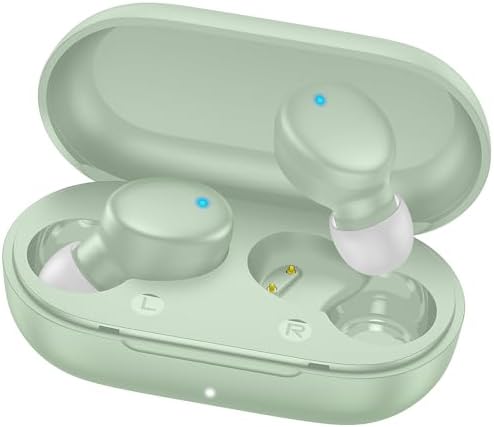
The everyday pair: MOZOTER Mini Wireless Earbuds Bluetooth 5.3 in Ear Headphones Headsets
 Visit on Amazon →
This is the smallest pair in the guide and the cheapest, and that combination is the entire point. Bluetooth 5.3 is the current standard, so the connection should behave with a modern phone, and the mini in-ear shape means a shallower fit than the deep-canal designs that make my ears ache. If your canals are small, shallow and light is not a compromise, it is the feature you want.
At this price, expect tradeoffs. The battery inside a pair this small will be modest next to the sports pair below, and the case will be doing more recharging than extending. That is fine for a commute or a walk, and it is not fine for a ten-hour shift on a warehouse floor.
What to check when it arrives: pair the left bud alone, then the right bud alone, and confirm both work independently. Then set your phone to the lowest volume step that is still audible and listen for a full minute. If that floor is comfortable, keep the pair. If it is already too loud for a quiet room, send it back, because you will never stop noticing it.
Flaws but not dealbreakers: tiny buds are easy to lose, and there is no fin or hook holding them in. If you lose earbuds the way my guitarist loses picks, the sports pair is the safer money.
Anyone who wants a cheap second pair for the desk, the bus, or a bag that lives in the car will be fine here.
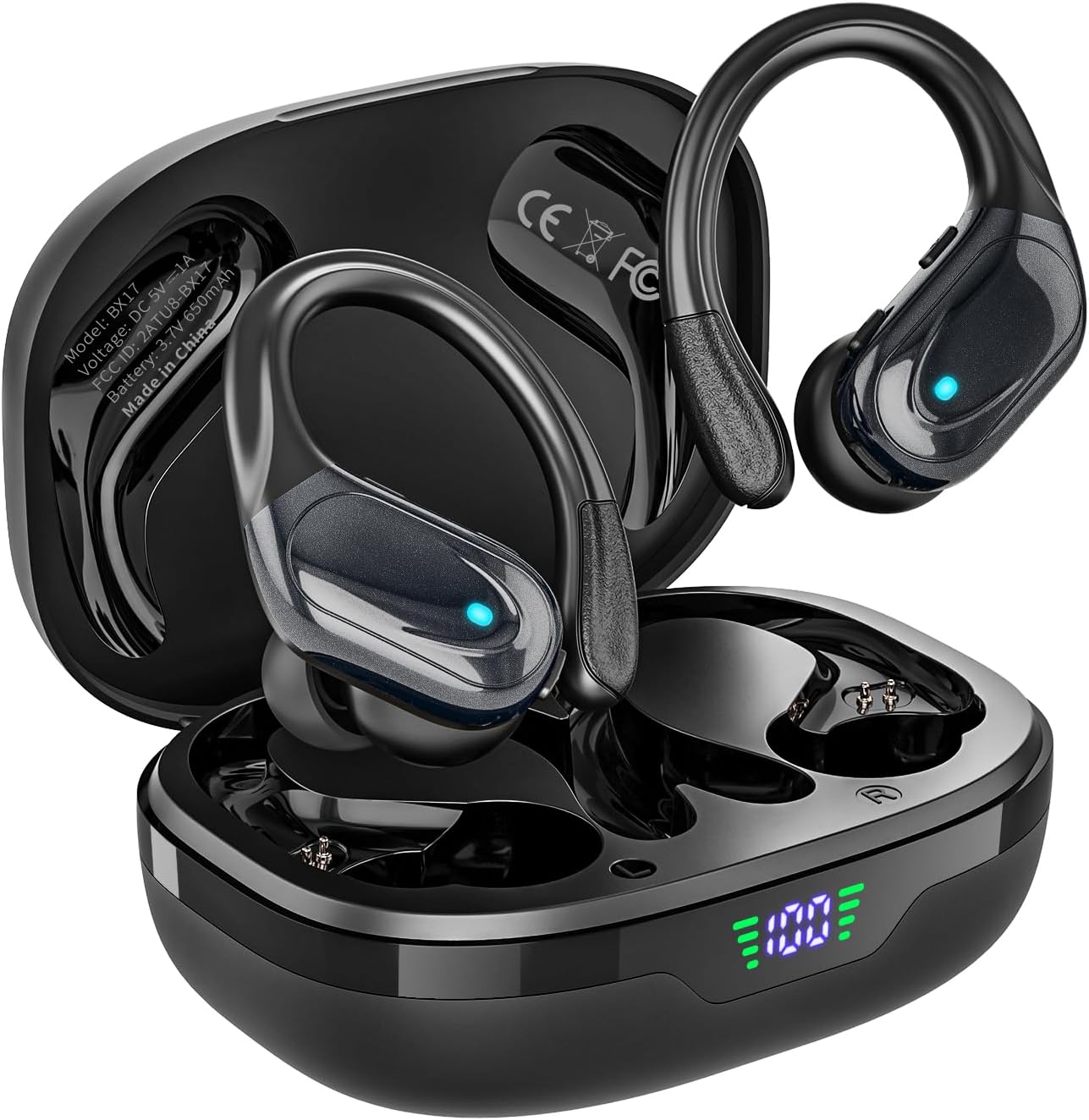
The workout pair: HAOYUYAN Wireless Earbuds, Sports Bluetooth Headphones, 80Hrs Playtime Ear Buds with LED Power Display, Noise Canceling Headset, IPX7 Waterproof Earphones for Workout/Running(Black)
 Visit on Amazon →
The IPX7 rating is the headline for me. It means the pair survives a brief dunking, which is more than sweat ever needs, so rain and a soaked shirt stop being a worry. The playtime figure is a case number: it is the buds plus every recharge the case holds, measured at a volume lower than you will actually use. Read it as a ceiling, then divide by the hours you really listen each week to see how often you will go hunting for a cable.
The LED power display is one of those small features that changes daily life, because you stop guessing whether you have one charge left or five. Noise canceling on a budget pair is really call noise reduction, so judge it on phone calls, not on how quiet a coffee shop gets. Ask the person on the other end whether you sound like you are standing in a wind tunnel.
The sports shape matters more than the spec list. A pair built for running usually has a fin, a hook, or a deeper seal, and any of those keeps it in your ear through a treadmill session. Check that it does not press on the cartilage, because a firm fit that hurts is worse than a loose fit you have to reseat twice a mile.
Flaws but not dealbreakers: the playtime claim is the number everyone quotes and the number least likely to match reality at your volume. Run your own drain test in the first week, before you decide.
Anyone who sweats, runs in the rain, or has already lost a pair mid-workout should start here instead of with the mini pair.
Setting them up so they do not annoy you
Step one: charge the case and both buds before the first pairing. Plenty of pairs arrive with a partial charge, and half the pairing weirdness people blame on cheap hardware is just low battery on one bud.
Step two: pair one bud at a time. Put the other bud in the case and connect only the first one. Then swap. If either bud refuses to work alone, you have learned the most important thing about the pair while the return window is still open. Independent use is the feature I did not know I needed until I had it.
Step three: find your ear tip size before you judge the sound. If your canals are small, start with the smallest tip, and remember that seal beats size. A bad seal eats the bass, which makes you crank the volume, which makes the pair sound worse than it is. Test the fit on a walk, not sitting on the couch.
Step four: set the volume floor before you set the ceiling. Do this at night in a quiet room. Play something at the lowest step your phone allows. If that is comfortable, you own a pair you can use in bed. If it is already blasting your eardrums, try a different tip, and if that does not fix it, return the pair. You will fight that floor every single night otherwise.
Step five: learn the tap map and then stop fighting it. Cheap touch controls are the most common frustration in this tier. Read the tap map on the listing page, give it an honest week, and if the controls still miss, use your phone instead of tapping at your ear in traffic.
Step six: test what the case actually does. Run the buds dead, then note how many full recharges the case delivers before it needs a cable. That number is the real battery story, and it is the one no marketing copy gives you.
Step seven: pair every device you own, one at a time. Phone, laptop, tablet. Some cheap pairs hold two devices happily and some forget the first the moment the second connects. Better to find that out at your desk than on a call.
Step eight: rename them in your Bluetooth settings. If you own more than one cheap pair, you will otherwise spend a confusing minute connecting to the wrong one every morning.
What to check in the first week
The first week is the whole evaluation. Everything before that is just the unboxing.
Walk in them. Sweat in them. Take a real phone call on a noisy street and ask the other person how you sounded. Wear them for an hour of dishes and see whether your ear canals are sore afterward, because soreness shows up late, not early. Watch one video and check the lip sync, since latency is the quiet killer in this price range. Drop one on the sidewalk, because it will happen eventually and you want to know now, not in month three.
If the pair clears the week, it will probably clear the year. If it fails one of those checks, return it and try the other shape. That is the entire decision, and it takes seven days instead of a month of reading contradicting reviews.
The competition and why it lost
The Soundcore P20i is my baseline and the pair I have bought three times. Decent bass, each bud works alone, soft power-on sounds, a volume floor that actually goes quiet, and a case that holds a charge forever. It is the pair everything else gets measured against, and it is the reason I am hard on cheap earbuds that skip the basics.
The Fhumsh A10 Pro exceeded my low expectations, with stable Bluetooth and call clarity that held up at the gym. Excellent value. I still reach for the P20i first, which tells you how small the gaps are at this price.
Open-ear buds that sit outside the canal were my compromise for years. They stop the ear pain, and they cost you sound quality, and I got tired of pretending otherwise. Wired headphones still sound better than anything wireless in this tier, but the phone moved on and the adapters die, so that argument is settled whether I like it or not.
What loses outright: pairs with a minimum volume loud enough to hurt, pairs that cannot run one bud solo, pairs that announce themselves at full volume, and any listing that calls a charging case a playtime extender. Those are the disqualifiers, and none of them show up on a spec sheet.
What you give up at this price
No premium codecs. No reliable multipoint. No noise canceling that truly silences a plane. No app with a parametric EQ. Plastic everywhere, and a case that will scratch. If those matter to you, you are shopping in a different tier and this guide is not for you.
What you get instead is a pair you can lose without grieving, replace without a spreadsheet, and wear in the rain without a second thought. That is a real trade, and for walks, workouts, and commutes it is the right one.
The bottom line
Pick the shape that matches your week: the mini pair if you want something small, cheap, and easy to forget in a pocket, the sports pair if you sweat, run, or lose things. Then charge them, pair each bud alone, find the right tip, check the volume floor at night, and give them one honest week of walks and phone calls.
If they are fine, keep them and stop reading reviews. Fine is the highest praise in this tier, and it is the only thing that matters.