Most people shopping for budget wireless earbuds get stuck in the same loop. You read ten reviews, the ten reviews contradict each other, you order something on gut instinct, and then you spend two weeks wondering whether you picked wrong. I did that for years, and I still do it every time a new pair lands on my desk.
Here is the short version of what I learned: the spec sheet does not decide anything. Battery at your normal volume, independent bud use, the minimum volume floor, and whether they survive a long walk without hurting your ear canals. That is the test. Everything else is marketing.
I do live sound and recording cleanup around Nashville, which means my work hours go to monitor mixes and podcast audio. At the desk I use a serious pair of Sony over-ears, the reference pair that stays home. Every other listening hour, walks, the gym, dishes, the grocery store, happens on cheap earbuds. This guide is about that second category.
Why you should trust me
I have been a repeat buyer in the budget tier, not a sponsored reviewer. I bought the same cheap pair three times. Lost one after a year, lost the second after a year and seven months, and I would have bought a fourth. That is not brand loyalty, that is just the math of a pair that works.
For years I refused wireless on principle. Wired sounds better. I still believe that, and I still run wired at the desk. But the phone stopped having a jack, and the adapters die every few months, and eventually you make peace with reality. So the question stopped being wired versus wireless and became which cheap wireless pair is actually fine.
Two other things shape how I judge these. First, my ear canals are small and easily sore. Almost every pair hurts eventually, and every pair hurts at first. When I say a pair is comfortable, it survived my ears, not a reviewer's. Second, I mix live monitors for a living, so I hear dropout and lag immediately. Bluetooth stutter is not a subtle thing to me.
How I picked and how I tested
I keep a spreadsheet, because the marketing copy does not care about your ears and the spreadsheet does not care about the marketing copy. Every pair that comes through gets the same run:
Battery drain at normal volume, not at half volume with nothing playing. I track how long a pair lasts during real listening and compare it to the number on the box.
Each bud solo. I take the left bud out and leave the right in the case, then swap. If a pair cannot run one bud at a time, it fails, and I did not know I needed that feature until I had it.
The volume floor. Minimum setting, quiet room, late at night. If the quietest setting still blasts my eardrums, the pair is useless for half my listening.
Two weeks of fit. Walks, workouts, chores. Sore spots show up on day four, not day one.
Drop and loss survival. My guitarist loses earbuds faster than he loses picks, so I pay attention to whether the case is pocketable and whether the buds stay put when you bend over.
That is the whole method. No lab, no measurement rig, just the same gauntlet for every pair and a note on whether it came out the other side.
The two pairs worth buying
Both of these come from the same budget tier and both are built for different jobs. One is a daily driver, one is for sweat. Do not buy both unless you actually need both.
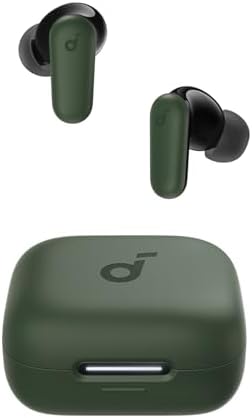
Everyday pick: Soundcore P30i by Anker Noise Cancelling Earbuds, Hands-Free Viewing
 Visit on Amazon →
Check current Amazon price. The P30i is the pair I reach for when I want one thing that covers everything: noise cancelling for the loud part of the commute, and the hands-free viewing mode for watching video without holding the phone. The viewing part matters more than people expect. Latency is the reason a lot of cheap buds are fine for music and awful for video, and a mode built around watching is a sign the pair is meant to be used that way.
Noise cancelling at this price is not the same as the noise cancelling on a premium pair. It is there to knock down the drone of a fridge, a bus engine, or a lawnmower, and it does that job. Do not expect it to erase a crowded coffee shop. Expect it to make the room quieter so you can listen at a lower volume, which is the real benefit.
For me the deciding factor is the shape. The P30i sits in the canal like a normal in-ear, so tip selection works the way you expect and you are not fighting an unusual nozzle. That matters when your ear canals are as fussy as mine. Bring patience to the tip selection, and if your ears hurt on day three, go smaller, not bigger.
Flaws but not dealbreakers: Noise cancelling on a budget pair is a volume tool, not a silence machine. If you need real isolation for flights, you are shopping in the wrong tier.
This is the pair for commutes, desk work away from the reference pair, podcasts, and video.
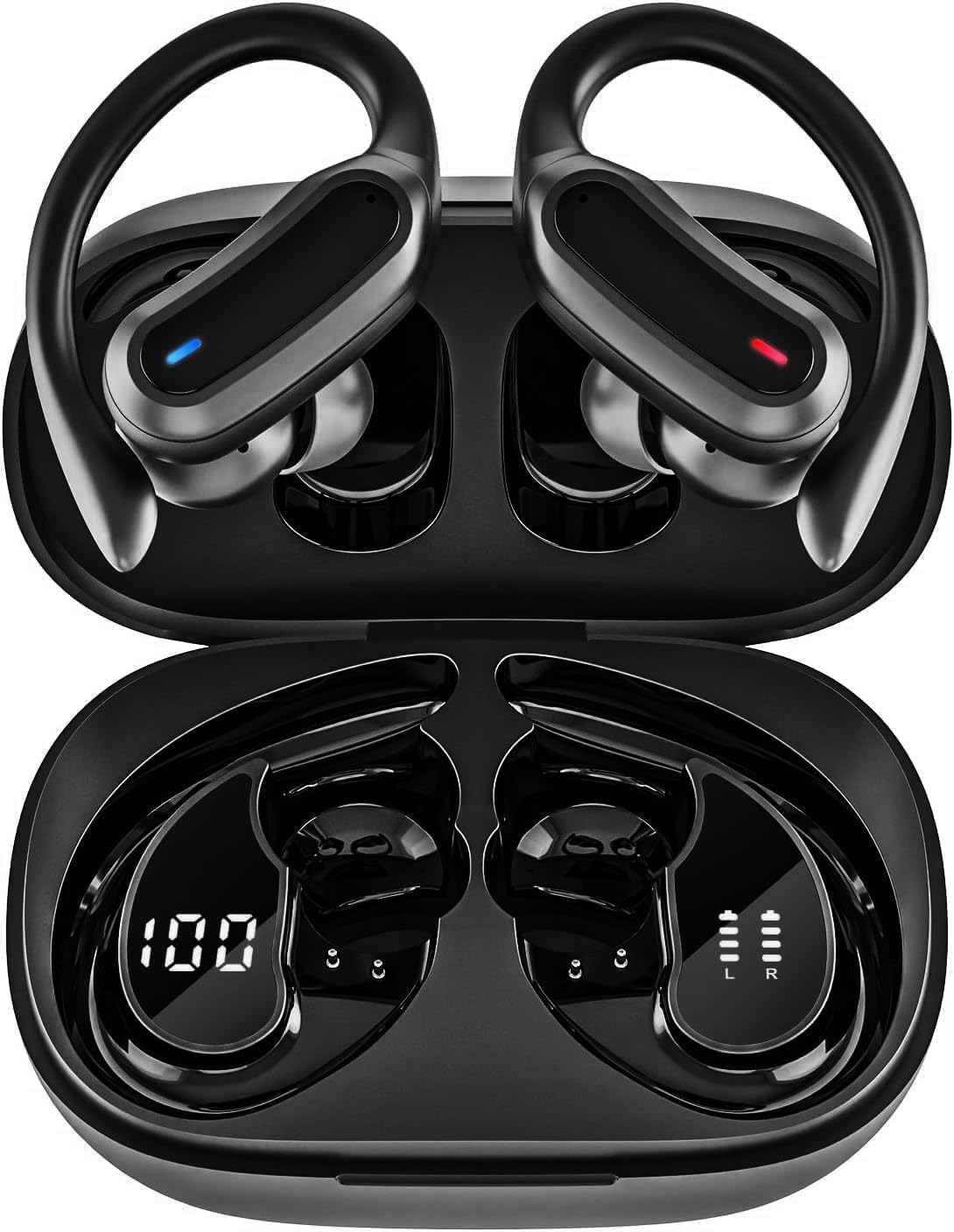
Workout pick: Wireless Earbuds Bluetooth Headphones, 54H Playtime Stereo Over Ear Buds with ENC Noise Cancelling, LED Power Display, IPX7 Waterproof Sport Earphones with Earhooks for Running/Workouts (Black)
 Visit on Amazon →
Check current Amazon price. This one is built around the earhook, and the earhook is the whole point. A hook that loops over the top of your ear anchors the bud with something other than canal pressure, so it can sit shallower and stay in place while you run, sweat, or bend over to rack a weight. If your canals get sore from normal in-ears, this is the shape to try first.
The listing claims 54 hours of playtime, and I want to be straight about that number. Playtime claims come from a specific volume and a specific codec, and the only figure that matters is what you get at your own normal volume. Run your own drain test in the first week, with the case in your pocket and the volume set where you actually listen. The LED power display on the case helps here, because you can see the level before you leave the house instead of guessing.
IPX7 means it survives sweat, rain, and a rinse, but it does not mean you should drop a wet bud back in the case and seal it up. Wipe it down first. Charging contacts and water are a bad combination regardless of the rating.
ENC is the call feature, and it is the one I actually test, because calls are where budget buds usually fall apart. Call someone from a noisy street and ask them to be honest with you. If they say you sound far away, the microphone setup is doing marketing rather than work.
Flaws but not dealbreakers: Over-ear hooks are bulkier, and they can interfere with sunglasses or a helmet strap. This style also often sounds thinner than a sealed in-ear, because it does not plug the canal.
This is the pair for running, the gym, yard work, and any situation where a bud hitting the pavement would ruin your week.
How to set up a new pair the right way
Setup is where most people lose the plot, because they pair the buds, hear sound, and stop. Twenty more minutes gets you a pair that behaves.
Step one: charge everything first. Case and buds both. A pair that dies at the gym on day one was usually shipped at partial charge.
Step two: pair, then test each bud alone. Take one bud out, leave the other in the case, and play something. Then swap. If one side refuses to work solo, you want to know that inside the return window, not in month three.
Step three: find the volume floor. Silence in the room, one notch at a time, all the way down. Note where the sound starts and where it stops being usable. A pair with a bad floor is a pair you cannot use at night.
Step four: fix the fit before you judge the sound. Bass disappears when the seal breaks, so a loose tip sounds like a bad driver. Try every tip size in the box, and give each one a full day before you decide.
Step five: check the app, if there is one. An equalizer that lets you pull down the treble is worth more than any spec on the box. Firmware updates also fix pairing bugs that ship with early units.
Step six: make a real call. Outside, in wind, with traffic nearby. Ask the person on the other end how you sound. This takes three minutes and tells you more than any review.
Step seven: learn the case math. A charging case recharges your buds. It does not extend the battery life of the buds themselves, no matter how the listing words it. What matters is how many recharges you get before the case itself needs a cable.
Step eight: dry before you dock. Especially with an IPX7 pair. Sweat on the contacts is how buds start failing to charge.
What to avoid
The dramatic voice announcement is my least favorite thing in this category. A loud greeting every time you pull a bud out is a dealbreaker for me, and it is worth checking before you buy, because you cannot always turn it off.
The second thing to avoid is a pair that cannot run one bud independently. You will want it the moment you need one ear open for traffic, a kid, or a coworker.
The third is a minimum volume that is still loud. That is a comfort and hearing issue, not a nitpick.
What this all costs
Both pairs sit in the budget tier, and both show their price on the listing, so check the current Amazon price on each before you decide. The real cost is not the sticker, it is the replacement math. If a pair lasts a year and you replace it once, you are paying for the pair again every year. If it lasts two years, you cut that in half.
The upgrade that actually saves money is not a more expensive pair. It is a pair you do not lose. A pocketable case and a hook that stays on your ear do more for your yearly spend than any feature on the box.
The bottom line
Buy the everyday pair if you want one set for commuting, podcasts, and video. Buy the workout pair if you sweat, run, or have ear canals that hurt after an hour in normal in-ears. If you can only afford one, pick based on where you listen most, not on which listing has the longer feature list.
Then run the eight setup steps and give it two weeks. "Fine" is the goal here. A pair that just works, every day, without you thinking about it, is worth more than a pair that impresses for a week and annoys you for a year.