Most people start shopping for earbuds by comparing brands. That is the wrong first move. The first move is deciding whether you want a cable or a battery, and wired vs wireless earbuds is a question about your week, not about specs. Get it wrong and you end up with a pair that sounds fine and still annoys you daily, or a pair that is convenient right up until the case is empty and you are three miles from home with no music.
I do live sound and recording cleanup around Nashville. At the desk I run a serious pair of over-ears, the reference pair, and those stay home. For walks, the gym, chores, and phone calls I live in the budget tier. I held onto wired headphones with a 3.5mm jack for years because I believed wireless sounded worse, and mostly it does. Then the adapters started dying and the phone stopped cooperating, so I made peace with it. I have bought the same cheap pair three times now, lost two of them, and I am not embarrassed about it.
My ears hurt easily. Small canals, sore after an hour, every tip size and every material I have tried. That matters here because fit decides more than frequency response does. If it hurts or falls out, nothing else about it counts.
So this is the process. It is short, it is boring, and it saves you from buying twice.
Why you should trust me
I have spent years in the cheap tier on purpose. My daily listening is budget earbuds, my reference listening is a pair of over-ears that never leaves the house, and everything I write about here I paid for myself. No sponsored gear, no review units, no borrowed samples.
Two caveats on every claim I make. Comfort claims come with my small-canal history attached, so when I say a fit works, it survived my ears, not a showroom demo. Battery claims come from draining buds at normal volume, not from the number printed in the product name. I check the volume floor on every pair before I say anything nice about it, because a minimum setting that still blasts your eardrums makes an otherwise good pair useless at night.
How I picked and how I tested
This is a how-to, not a shootout. The two pairs below are the two answers to the wired or wireless question. One has a battery and earhooks. One has a cable and nothing to charge. Between them they cover almost every real situation I run into.
The tests I run are the same on everything:
- Battery drain at my normal listening volume, not at low volume with the screen off.
- Each earbud used alone, left and right, with the phone in a pocket.
- The volume floor, meaning how quiet the quietest setting actually gets.
- Fit on a two mile walk and a gym session, with the small-canal question answered honestly.
- The power-on sound, because a loud spoken announcement is a dealbreaker for me.
- Call quality on a noisy street, with the person on the other end asked directly.
I do not have a lab. I have a spreadsheet, a phone, a stopwatch, and a habit of writing down what actually happened instead of what the box promised. That is enough to sort wired from wireless, which is what this guide is for.
The two pairs that answer the question
One of these lives on a hook by the door. The other lives in a bag pocket and has never needed charging, because there is nothing to charge. Pick the one that matches your phone and your week.
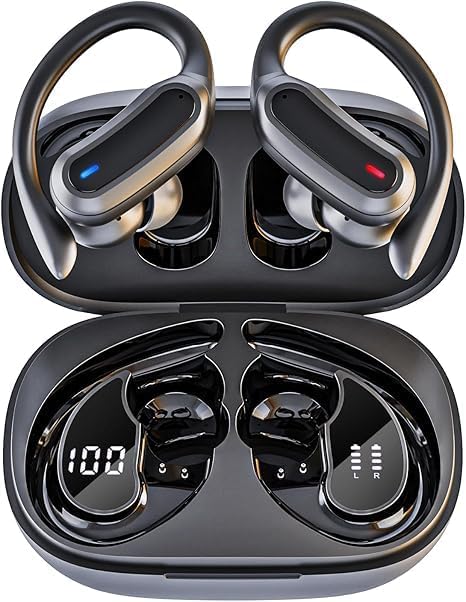
Best for workouts and sweaty runs: Wireless Earbuds Bluetooth Headphones, 54H Playtime Stereo Over Ear Buds with ENC Noise Cancelling, LED Power Display, IPX7 Waterproof Sport Earphones with Earhooks for Running/Workouts (Black)
 Visit on Amazon →
The earhook shape is the reason this one is here. A hook that carries the weight on the outside of your ear instead of pressing a tip deeper into your canal is the difference between finishing a workout and quitting at the twenty minute mark, at least on my ears. That design plus IPX7 waterproofing is the right combination for running, lifting, and anything where sweat is involved.
The listing claims 54 hours of playtime, ENC noise cancelling for calls, and an LED power display on the case. Treat all of it as claims, including the 54 hour figure, which is a case-included number. The case recharges the buds, it does not extend them into another dimension, and anyone selling you a magic case is selling you arithmetic. What I want from a wireless sport pair is simple: a stable connection with the phone in a pocket, both buds working independently, a volume floor quiet enough for a late walk, and no dramatic voice announcement when I put them in. That is the checklist I would run here before trusting the number in the name.
Call quality is where the noise cancelling claim earns its keep. On a noisy street the microphone array is doing the work, not the speaker, so ask the person on the other end how you sound before you decide.
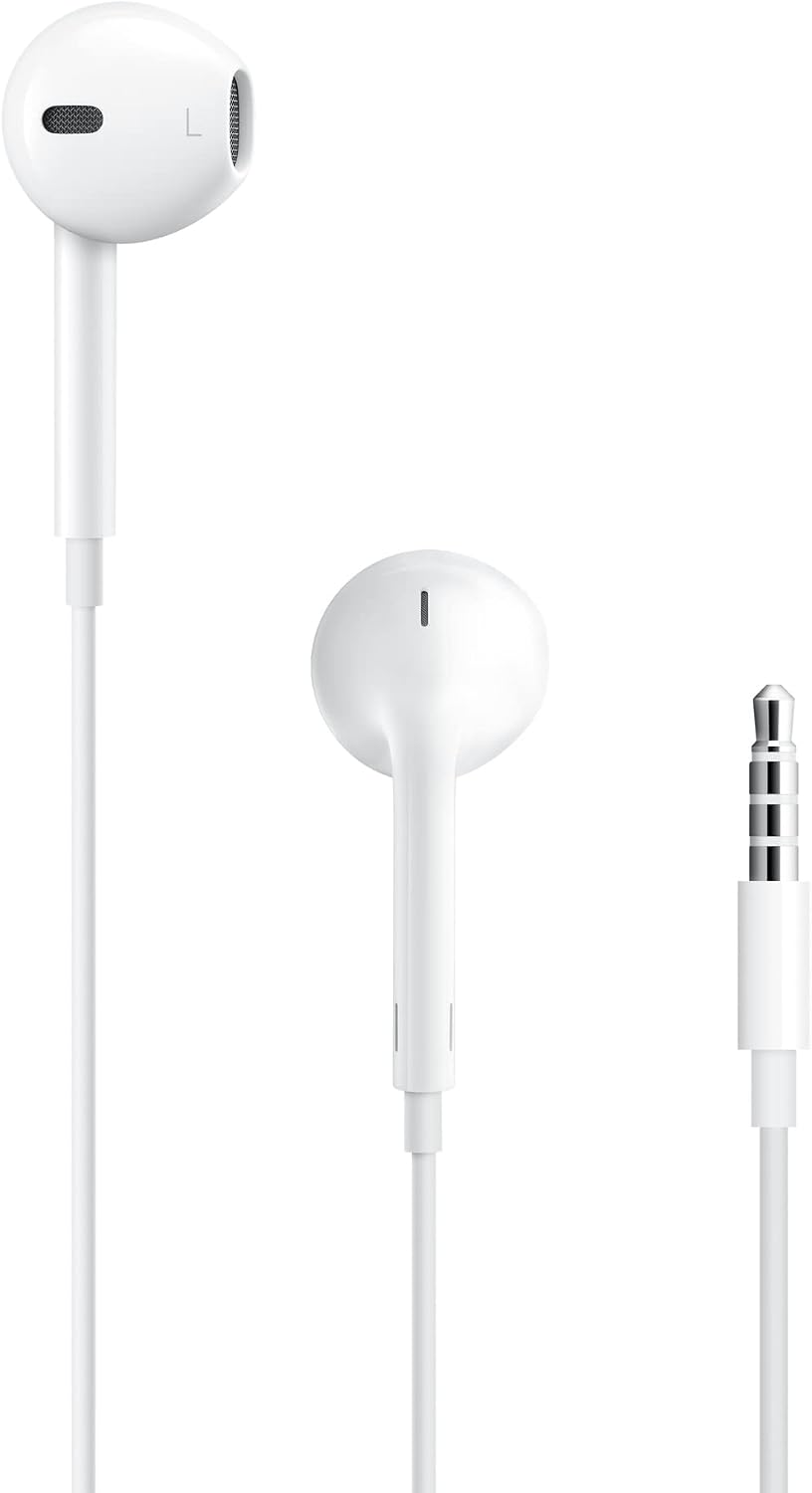
Best for zero-charging, plug-and-play listening: Apple EarPods Headphones with 3.5mm Plug, Wired Ear Buds with Built-in Remote to Control Music, Phone Calls, and Volume
 Visit on Amazon →
Nothing to charge, nothing to pair, nothing to lose except the whole thing at once. The remote on the cable handles volume, play and pause, and phone calls, which is the entire control surface most people need. I still think wired sounds better than wireless at the same price, and a cable is the only setup that cannot run out of battery at the worst possible moment.
The fit is the other half of the story. These sit in the outer ear rather than sealing the canal, and for small, sore canals that is a genuine advantage, because nothing is pressing inward and an hour of listening does not turn into an ache. The trade is obvious and worth saying plainly: no seal means no isolation. On a loud street, in a loud gym, or on a plane you will hear the room over your music. If you want quiet, this is not the pair for that. And if your phone has no headphone jack, wired means a dongle, and dongles die on you, which is the exact frustration that pushed me wireless in the first place.
Where it wins is the minimum volume problem. Wired gives you a genuinely quiet floor, which is what you want for night listening, and there is no case to forget on a counter.
The workflow: eight checks before you spend
Answer these in order. The first two tell you which category you belong in. The rest keep you from buying the wrong pair inside the right category.
Step one: check the port on the phone you actually carry. If it still has a headphone jack, wired is the cheapest reliable path and you can stop overthinking. If it does not, wired means an adapter, and adapters are the first thing to fail in a bag or a pocket. That single fact decides the category for most people.
Step two: do the battery math on your longest session, not your average one. A pair that lasts through a commute is useless if your Saturday walk runs three hours. Wireless wins when you listen in long, mobile blocks. Wired wins when your listening is short, desk-bound, or unpredictable.
Step three: decide what has to stay in your ear. Hooks and over-ear shapes stay put when you sweat. Sealed tips stay put when they fit. Open designs like the EarPods stay comfortable and let the world in. Know which of those three you are buying before you open a single listing.
Step four: check the volume floor. Most reviews never mention it. Set the volume to minimum and see whether you can still hear the room. If the quietest setting is loud enough to blast your eardrums, you will not use them at night, no matter how good they sound.
Step five: check what they say when they turn on. A loud spoken announcement at full volume is a dealbreaker for me, and it should be for you. Soft chimes or nothing. It is a five second check that saves a year of irritation.
Step six: confirm independent use on any wireless pair. Both buds working alone is a feature I did not know I needed until I had it. One bud in, one charging, phone in the other pocket. A pair that cannot do that is a worse product than its spec sheet suggests.
Step seven: read the case claim honestly. The case recharges the buds. It does not create hours from nothing, and "extends playtime" is marketing arithmetic. What matters is how many charges it holds and whether the buds sit in it securely enough to survive a bag.
Step eight: buy, then live with them for a week inside the return window. Wear them on a walk. Wear them at the gym. Make a phone call. Test the waterproofing claim in the rain. A week tells you more than any review rabbit hole, and I say that as someone who has been down that rabbit hole more than once.
What I ruled out and why
Generic cheap wireless pairs, the ones with no name and no support page, are the enemy of this whole process. The failure pattern is always the same: lag between video and audio, dropouts when the phone is in a back pocket, a battery that dies after a couple of hours, and a minimum volume loud enough to hurt. You save a little and lose the point of owning them.
Open-ear buds that sit outside the canal were my compromise for years, and I understand the appeal, because they stopped the ear pain. But you sacrifice sound quality and you know it. If comfort is the entire problem, an over-ear hook design gets you stability with better sound than an open bud, which is why the sport pair above is the version of that idea I would buy now.
I also ruled out dongles and adapters for daily use. They work, right up until they do not, and they fail at the worst time, in a pocket, at the gym, on a walk. That is not a knock on wired sound. It is a knock on the connector.
Over-ear reference headphones are not in this conversation. Mine stay at the desk because that is the only place they make sense.
What this all costs
Both pairs sit in the budget tier, and that is the point of the guide. No subscription, no replacement tip program, no ecosystem to buy into. One has a case that needs a cable occasionally. One needs nothing at all.
The real cost of a cheap pair is the second purchase. Buy the wrong shape and you replace it in a month, which costs more than buying the right one once. So run the eight checks, pick the category that matches your phone and your week, and then stop reading reviews. That is the part almost nobody does.
Check current Amazon price on both listings before you decide, since budget stock moves around. Then use the return window honestly. A week of walks and one phone call will tell you everything the spec sheet left out.
That is the job. Your ears were doing the work all along. Let them.