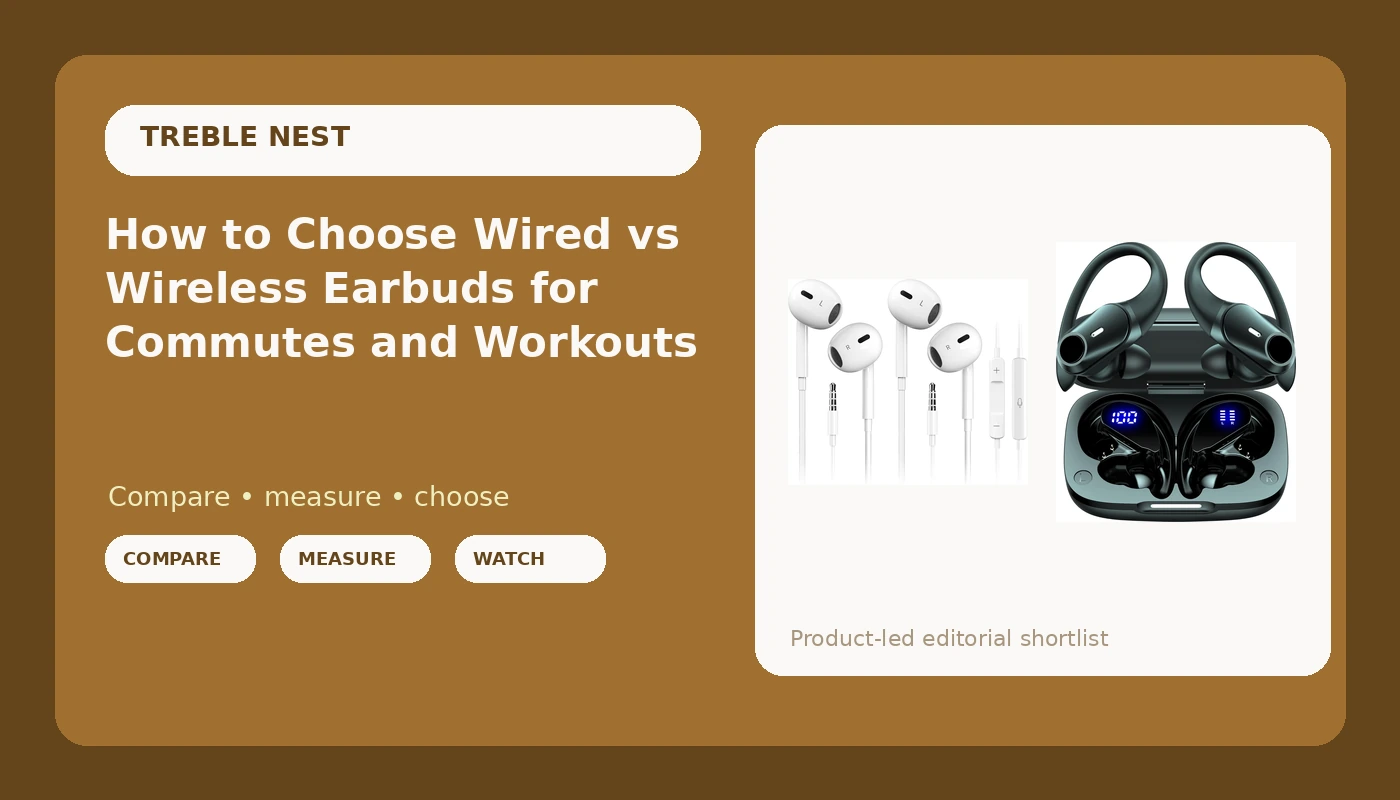
Most people shop for earbuds the way I did for years: read forty reviews, get more confused with each one, order whatever is on sale, and resent the purchase by month two. Choosing wired vs wireless earbuds should be a one-afternoon job. It turns into a three-week spiral because nobody tells you what to check before you spend money, so you end up trusting a star rating from a stranger with different ears, a different phone, and a different commute.
I do live sound and recording editing around Nashville. At the desk I use a serious pair of Sony over-ears, the reference pair that stays home. Everything else in my day, the walks, the chores, the gym, the drive to a venue, runs through cheap earbuds, and that is the part of my life that has chewed through more gear than I want to count. I have bought the same Soundcore P20i three times, lost two of them, and would buy a fourth tomorrow. My ear canals are small and they hurt easily, so when I call a pair comfortable, I mean it survived me, not that it looked good on a spec sheet.
Below is the eight-step version of what I check before a pair earns a spot in my bag. Two pairs do most of the work for most people, and I will show you both. The steps matter more than the picks, though. Run them and you will know inside two weeks whether you bought the right thing, while the return window is still open.
Why you should trust me
I mix monitors in small venues and clean up podcast audio for a living, which means I hear the same track through a $1,200 reference pair and through whatever the artist actually listens on. That job teaches you fast that consumer gear has its own truth, and that a mix which only works on expensive headphones is a mix that fails.
I have paid for every pair I own. No sponsor sent me anything, no brand asked for a rewrite, and I am not going to pretend a $9 pair competes with studio cans. What I can tell you is what I check, what I have watched fail, and which cheap gear keeps working after the honeymoon. My standards are boring on purpose: no battery claim without a drain test at normal volume, no comfort claim without the small-ear-canal caveat, no volume praise without checking the quietest setting first.
How I picked and how I tested
This is the gauntlet, and it is the same one I run on every budget pair that comes through the house. Battery drain at a normal listening volume, not at half volume with the screen off. Each bud solo, left alone and right alone, including a phone call on each. The volume floor, which means how quiet the quietest setting actually gets. Pairing stability across a room with a microwave running. A twenty-minute fit check followed by two weeks of walks and workouts, because ear pain shows up on day three, not day one.
For wired pairs the test changes. A cable has no battery and no codec, so what I care about is the connector surviving a pocket, cable noise when it rubs a jacket zipper, and whether the inline mic is usable on a call. That is the whole test.
Two phrases I use a lot, so here is what they mean. "Fine" is the highest praise in the budget tier. It means the thing works, does not annoy me, and I have no regrets. "Magic case" is my sarcastic term for marketing that turns "the case recharges your buds" into "extends playtime," as if the case were a second battery in your ears. It is not. It is a charger.
The two pairs I would start with
One wired, one wireless, because those are the two real answers and most people should own one of each rather than argue about it.
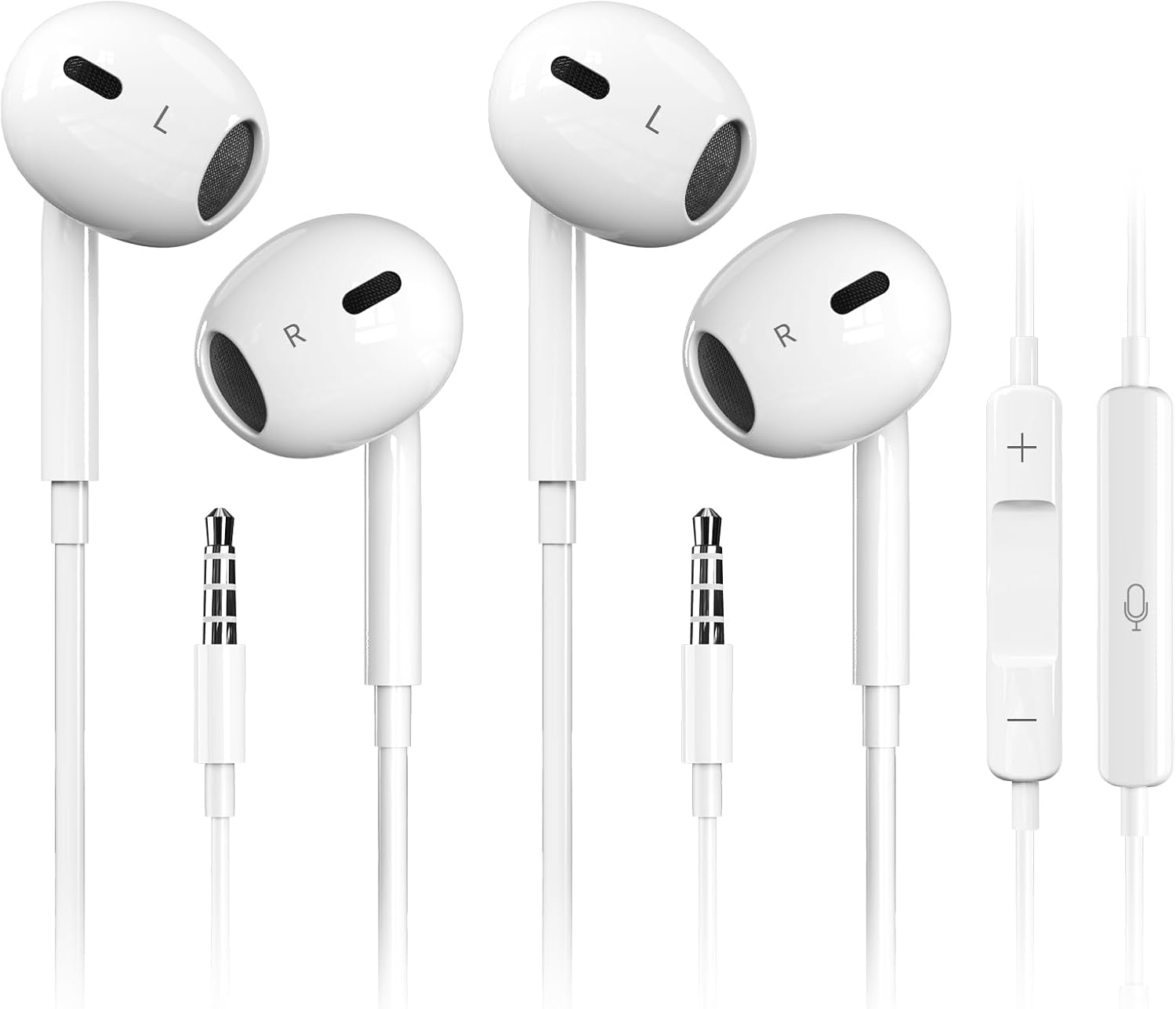
Wired pick: Antool Wired Earbuds,【Ultra Clear Calls & no Noise】 Headphones Earbuds Wired 3.5mm, in-Ear Earphones with Mic, Compatible with iPhone/iPad/Android/Laptop/PC 【2 Pack】
 Visit on Amazon →
This is the pair I point people to when they want zero maintenance. No pairing, no charging, no latency, no firmware, no "POWER ON" voice greeting you like an overenthusiastic receptionist. Plug it in and it works. The 3.5mm plug means it runs off a laptop, a tablet, a Switch, an older Android phone, or an iPhone through a dongle, and the two-pack is the practical part: leave one at the desk, one in the bag, and stop moving them around.
The built-in mic is fine for calls and video meetings. It is not a recording mic, and I would not track vocals on it. Expect some cable noise if the cord rubs against a zipper, which is true of every wired in-ear at any price. There is no noise cancelling here, so on a plane you will hear the plane.
If your phone still has a jack, this is the best sound per dollar you can buy. Check current Amazon price before you commit, because at this tier the math is the whole argument.
Flaws but not dealbreakers: The dongle situation on modern iPhones. You need a Lightning or USB-C adapter, and those adapters are exactly the thing that dies in a drawer after a year. Buy two.
Anyone with a laptop, a tablet, or a phone that still has a headphone jack should own a pair of these as the backup that never needs a charge.
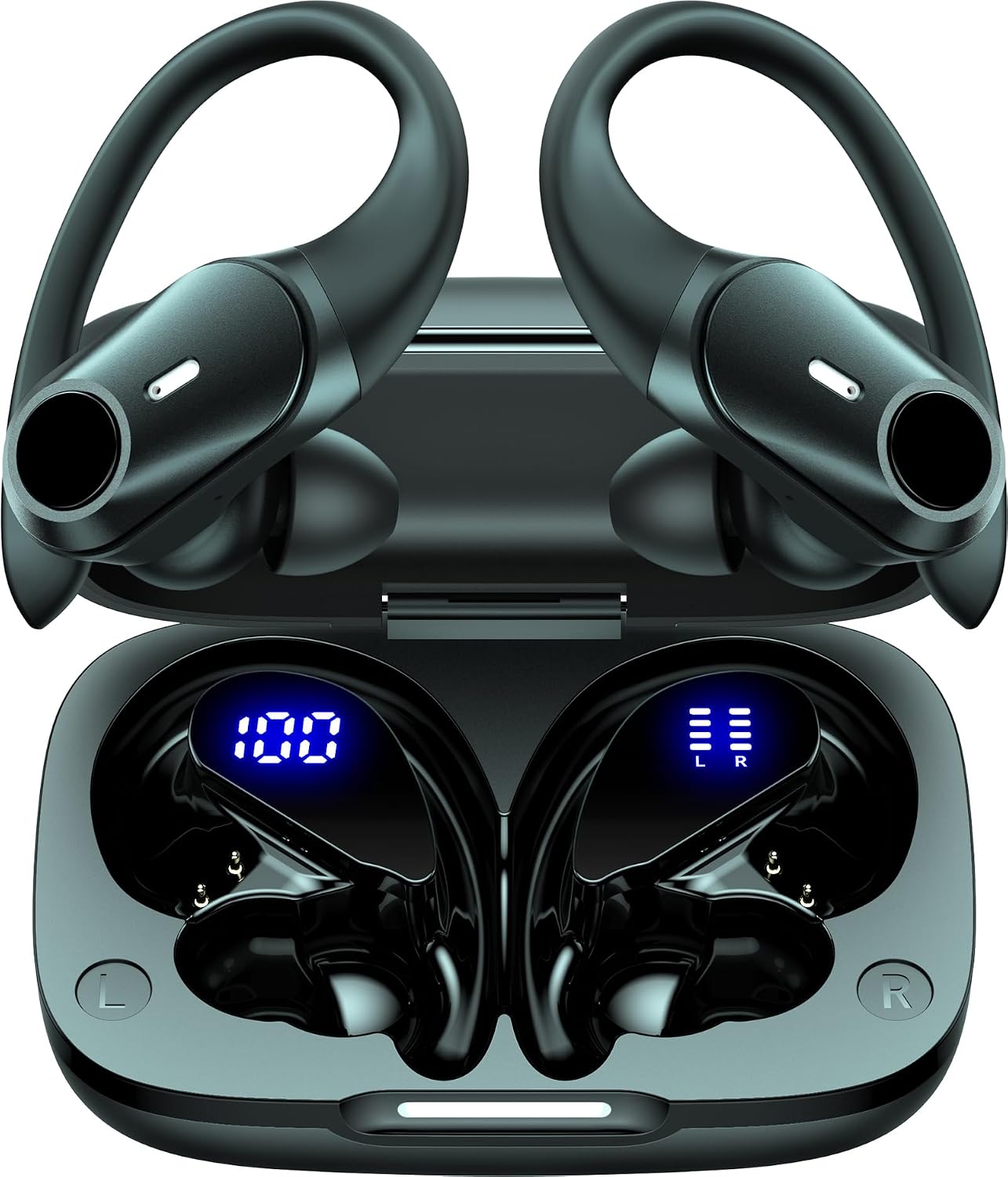
Wireless pick: Active Noise Cancelling Ear Buds Wireless Bluetooth Headphones 80H Playtime Display Charging Case 50dB ANC Over Ear Hooks Earbuds with Hi-Res Sound & Clear Calls for Sports Running Gym Workout Black
 Visit on Amazon →
This is the wireless answer for people whose phone killed the jack and who want the noise around them to get quieter. The over-ear hooks are the feature I care about most, because a hook is what keeps a bud in place when you are sweating and moving, and it takes pressure off the canal compared to a bud that seals deep. The display on the charging case is a small thing that turns out to be useful: you can see the battery state instead of guessing.
Read the playtime number carefully. That 80-hour figure is the buds plus the case recharging them, which is the magic-case language I complain about everywhere. What you actually want to know is the single-charge number, and that is step two below. The 50dB ANC claim is the same story: active noise cancelling is very good at steady low noise like road hum, a plane cabin, or a fan, and much weaker against voices and clatter. That is physics, not brand quality.
Flaws but not dealbreakers: Hooks can press on the arms of glasses. If you wear glasses, wear them together for a full hour before you decide. Check current Amazon price, then run the eight steps below during the return window.
Anyone who runs, lifts, or commutes on a noisy road and wants one pair to cover all of it should start here.
The actual workflow: eight steps
This is the part you came for. Do these in order and you will not need a second opinion.
Step one: decide where the pair lives. If your phone has a 3.5mm jack, wired is still better sound per dollar, and I will keep saying that. If your phone does not, you are choosing between a dongle that dies and a battery that runs down. That is the real trade. Pick wireless, then stop relitigating it.
Step two: battery first, always. Find the single-charge number, not the case number. A pair that dies after two hours is useless no matter how good it sounds, and no amount of case recharging fixes it, because you cannot listen while it charges. Drain it once at your normal volume, with your normal content, and time it.
Step three: check the volume floor. Set the volume to the lowest step above mute and listen at night. If the quietest setting is still loud enough to blast your eardrums, the pair is not for you, no matter what else it does well. This is the spec nobody publishes and the one that ruins the most otherwise decent buds.
Step four: run each bud alone. Take the left bud out, leave the right in the case, and play something. Then swap. Then make a phone call on each one by itself. Independent use is not a luxury feature once you have it, and a pair that refuses to work solo is a pair you will resent on a long call.
Step five: fit test, twenty minutes, then two weeks. Wear them for twenty minutes on day one and check for hot spots at the top of the canal. Then wear them on real walks and real workouts for two weeks. Ear pain shows up on day three. If it hurts on day three, it will hurt on day three hundred.
Step six: test the mic on a noisy street. Call someone from a sidewalk with traffic going by and ask them to be honest. ENC call clarity is the difference between a usable pair and a pair you mute on every call.
Step seven: check pairing and latency. Walk one room away from your phone with a wall in between. Then watch a video and check lip sync. Dropouts and a half-second audio delay are the two failures that make cheap wireless gear infuriating, and both show up in the first ten minutes.
Step eight: do the case math and set the return clock. Add up how many recharges the case gives you and divide it by your daily listening. That tells you how often the case itself needs a cable. Then put a reminder in your phone for three days before the return window closes, because that is your real deadline for all seven steps above.
The competition and why it lost
The generic no-name pairs are the enemy, and I say that as someone who has bought several. Lag, dropouts, a battery that quits after two hours, and a minimum volume loud enough to hurt. They look like a bargain and they cost you twice.
Open-ear buds that sit outside the canal were my compromise for years. They solve the ear pain, and I will give them that. But you sacrifice sound quality and isolation, and I got tired of pretending otherwise. If your canals hurt no matter what, they are a legitimate answer, just not a free one.
The Soundcore P20i remains my default recommendation for the cheapest wireless pair worth owning, and the Fhumsh A10 Pro exceeded my expectations at its price with stable Bluetooth and clear calls. Neither one is the subject here, and both are covered elsewhere on the site. The Sony over-ears stay at the desk, because serious listening and daily life are two different jobs.
What this all costs
I am not going to quote prices here, because they move and you can check current Amazon price on each listing faster than I can type it. What matters is the shape of the math.
Wired is the cheapest entry point by a wide margin, and the only ongoing cost is a dongle every year or so if your phone needs one. Wireless costs more up front and nothing after that except the occasional lost bud, which is the hidden tax on tiny gear. Spread over two years, both options land in the range of a few cents a day, and the wired pair lands lower.
The expensive path is buying twice, which is what happens when you skip the eight steps and order on impulse. A pair that hurts your ears, dies at two hours, or cannot be used solo gets replaced, and then you have paid twice for one job. Do the two-week fit test and the drain test during the return window and you will only pay once.
That is the job. Wired or wireless is the easy question. Whether it survives your ears, your battery habits, and your calls is the one that decides if you keep it. Run the steps, keep the receipt, and let the gear prove it.