Related: Best Budget Earbuds That Survive Daily Use
I held onto a 3.5mm jack for years. I do live sound and recording cleanup work around Nashville, and at the desk I use a serious pair of Sony over-ears, the reference pair, the ones that cost real money and never leave the house. I still think wired sounds better than wireless. But the adapters die, and the phone moved on, and eventually you make peace with it and go looking for wireless earbuds for daily listening. That search put me through the wringer.
Here is what happened. I read reviews that contradicted each other until I was further down the rabbit hole than when I started. I bought the Soundcore P20i on gut instinct, and I have now bought that pair three times. Lost one after a year, lost another after a year and seven months, and I was devastated both times. I would buy a fourth. Along the way I also tested the Fhumsh A10 Pro against my low expectations and it exceeded them.
I also have small, easily sore ear canals. Every pair hurts, no matter the tip size or material, so when I say something is comfortable, I mean it survived my ears and not just a reviewer's. That is the lens I bring to the four pairs below, and it is why this page is organized around fit, battery, and the small annoyances rather than frequency response charts.
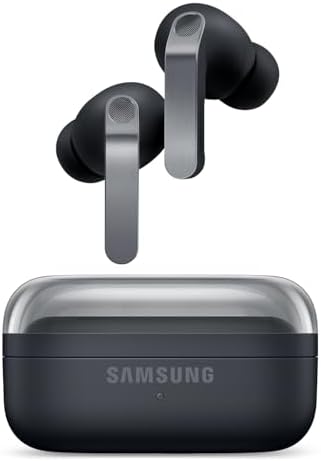
The flagship pick: Samsung Galaxy Buds 4 Pro (2026)
This is the newest generation in the group, the 2026 model with the AI label on it, in black. It is also the one where the price means the checklist has to come back perfect. Flagship money does not buy you a better fit. It buys you the newest hardware and whatever the AI features actually do once they are in your ears, and that is the part I would want to verify with my own week of use rather than a spec sheet.
So here is how I would run it. Battery drain at my normal listening volume, not the number on the box. Each bud alone, because independent use is one of those things I did not know I needed until I had it. The volume floor, because a minimum setting that still blasts my eardrums makes a pair useless for late night listening. And two weeks of walks and workouts to see whether my ear canals forgive it.
What I would expect from a flagship: the best build of the four, the most features, and the least tolerance for sloppy software. What I would not assume: that any of it matters if the tips do not sit right. Fit beats frequency response, always.
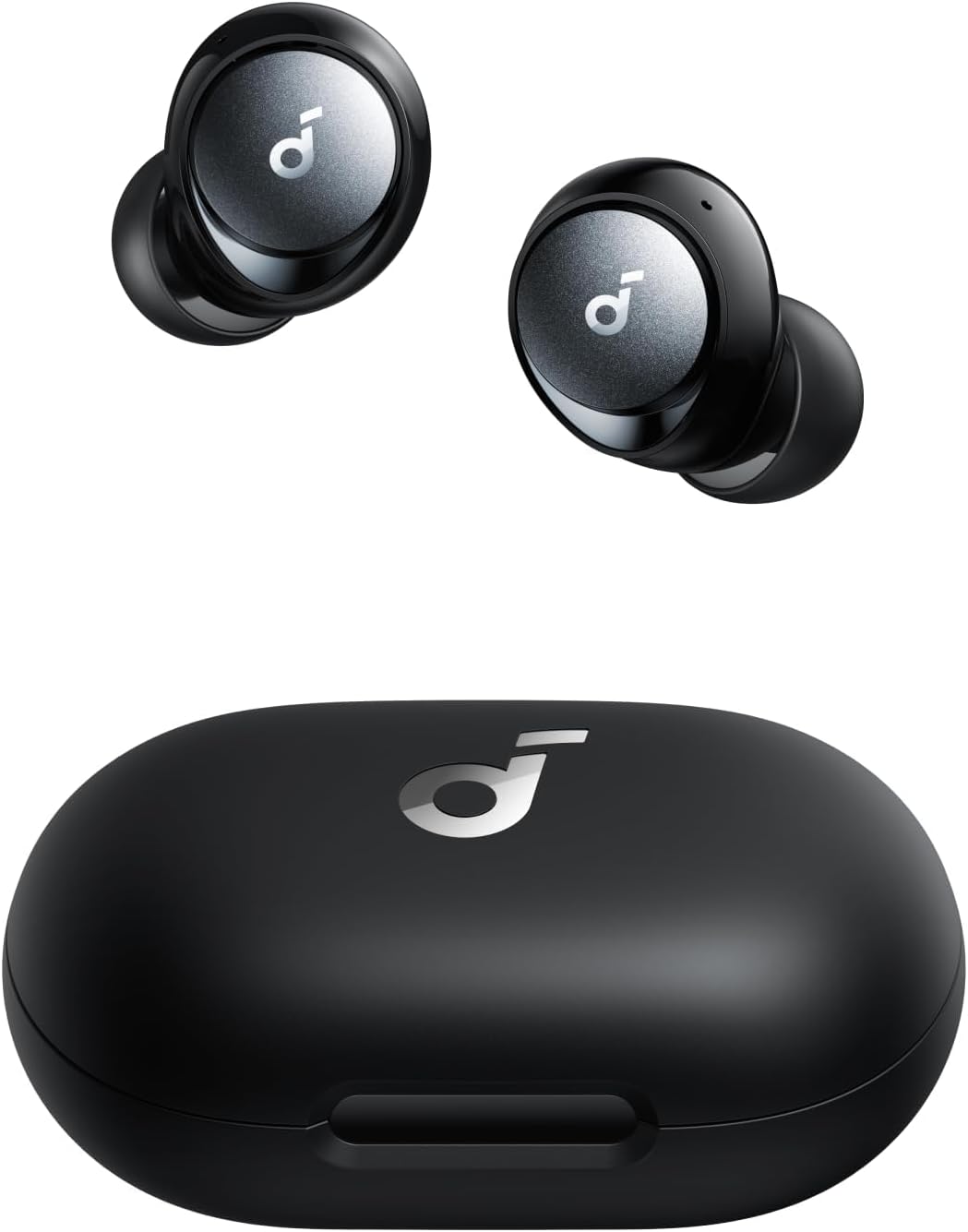
The noise cancelling middle: Soundcore by Anker Space A40
I have a history with this brand. The P20i is the pair I keep replacing, which tells you more about how I feel about Soundcore than any paragraph I could write. The Space A40 is a different animal, because the headline here is adaptive active noise cancelling, and that changes what you are paying for.
Noise cancelling is a fit problem wearing a chip as a disguise. Adaptive processing can only cancel what reaches the microphone, and what reaches the microphone depends on how well the tip seals your canal. On my ears, that is the whole ballgame. A pair with modest cancellation and a perfect seal will beat a pair with excellent cancellation and a leak every single time, and I have wasted money learning that.
If you commute, work near a road, or share a house with a dishwasher, this is the tier to shop in. Just do the fit test first, then judge the cancellation, in that order. And check the volume floor while you are at it. Cancellation and quiet are two different features, and only one of them is listed.
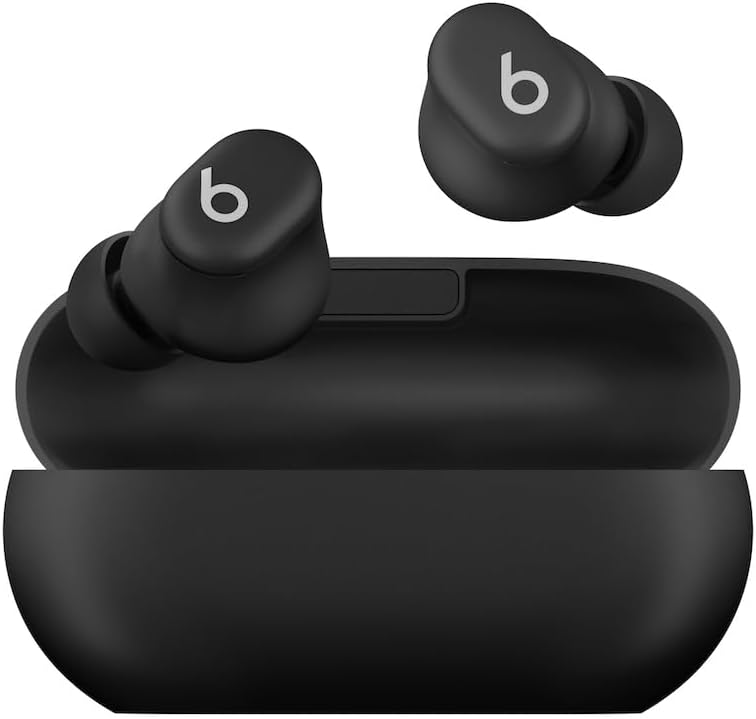
The battery play: Beats Solo Buds
Battery life is the first spec I check, because a pair that dies after two hours is useless no matter how good it sounds. This pair puts 18 hours of battery life right in the product name, along with Apple and Android compatibility and a built-in microphone. If that number holds up at normal volume, it is the headline of this whole list.
My rule, though, is no battery claim without my own drain test at normal listening volume. Box numbers are measured in conditions that do not exist in a real day, and I have been burned enough times to stop trusting them. So treat 18 hours as a promise. Then check it against how you actually listen, which is usually louder and longer than you think.
The cross platform compatibility matters more than people admit. I spent years in a drawer full of dead adapters trying to make one pair work with everything, and I am done with that. Built-in microphone is the other one worth noting, because call quality on a noisy street is where cheap pairs fall apart and where I do a lot of my listening.
The cheap pair worth trying: TOZO A1
The budget tier is where I live, so this is the section I care most about writing honestly. Bluetooth 5.3 and a light weight in-ear design are the two things the listing promises, and both are the right things to promise. Bluetooth 5.3 is the part that matters most to me, because lag and dropouts are the enemy in this price range, and I have owned the generic pairs that stutter every time you turn your head.
What I would not expect at this price is flagship sound. I would expect fine, and fine is the highest praise in the budget tier. Fine means it connects, it stays connected, the battery lasts a normal day, the case holds a charge, each bud works alone, and nothing about it annoys me on a daily basis. Gear that just works beats gear that impresses on paper.
Before you buy any budget pair, run the two checks that ruin the cheap ones. First, the volume floor. Can it get quiet enough for a quiet room, or does the lowest setting blast your eardrums? Second, the fit. Light weight helps, but if the tip hurts your canal after twenty minutes, nothing else about it matters.
How I test wireless earbuds
I run every pair through the same gauntlet, and it has not changed in years. Five questions decide it.
- How long does the battery actually last at normal listening volume? Not the box number, my number.
- Does each earbud work independently? I did not realize I needed this until I had it, and now I will not go back.
- How quiet is the minimum volume setting? If the floor is too loud, the pair fails for night listening, full stop.
- Do they stay in during a walk or a workout without hurting my ear canals? Two weeks minimum.
- Any obnoxious power-on announcement, or magic case marketing pretending a recharge is extra playtime?
That is the test, and the spec sheet never answers it. No recommendation without at least a week of walks, workouts, and actual phone calls. No battery claim without my own drain test. No fit claim without the small ear canal caveat. And no review of gear I have not paid for myself. I am a repeat buyer in the budget tier, not a sponsored reviewer.
Analysis: what each pair is really for
Read the four together and a shape appears. The Samsung Galaxy Buds 4 Pro (2026) is the newest generation and the most expensive, which makes it the pair for someone who wants the current model and will not spend the next two years wondering. The Soundcore Space A40 is the practical middle, and adaptive active noise cancelling is a real feature for commuting, but only if the seal cooperates.
The Beats Solo Buds lead with 18 hours of battery life, Apple and Android compatibility, and a built-in microphone, which makes them the pair for long days and cross platform households. The TOZO A1 sits at the other end with Bluetooth 5.3 and a light in-ear build, and the honest goal there is fine, not amazing.
Two things apply to all four. Fit beats frequency response, so the pair that stays comfortable wins even if another pair wins on paper. And the volume floor decides whether you can live with a pair at night, which is when most of us actually listen.
I will also say the quiet part out loud about charging cases. A case that recharges your buds does not extend your battery life into another dimension. It recharges them. When a listing sells you a magic case, you are paying for marketing, not capacity.
The wireless earbuds comparison table
This is the table I keep while I work through a batch of pairs. Stated battery is what the listing claims. The last column is what I check myself before I trust anything.
| Earbuds | Role | What stands out | What to check |
|---|---|---|---|
 Visit on Amazon → Visit on Amazon →Samsung Galaxy Buds 4 Pro (2026) |
Flagship | 2026 model, AI features in the name, black finish | Whether the extras earn the price for your ears |
 Visit on Amazon → Visit on Amazon →Soundcore Space A40 |
Noise cancelling middle | Adaptive active noise cancelling | Seal, because cancellation without a seal is marketing |
 Visit on Amazon → Visit on Amazon →Beats Solo Buds |
Battery play | 18 hours of battery life claimed, Apple and Android compatibility, built-in microphone | My own drain test at normal volume |
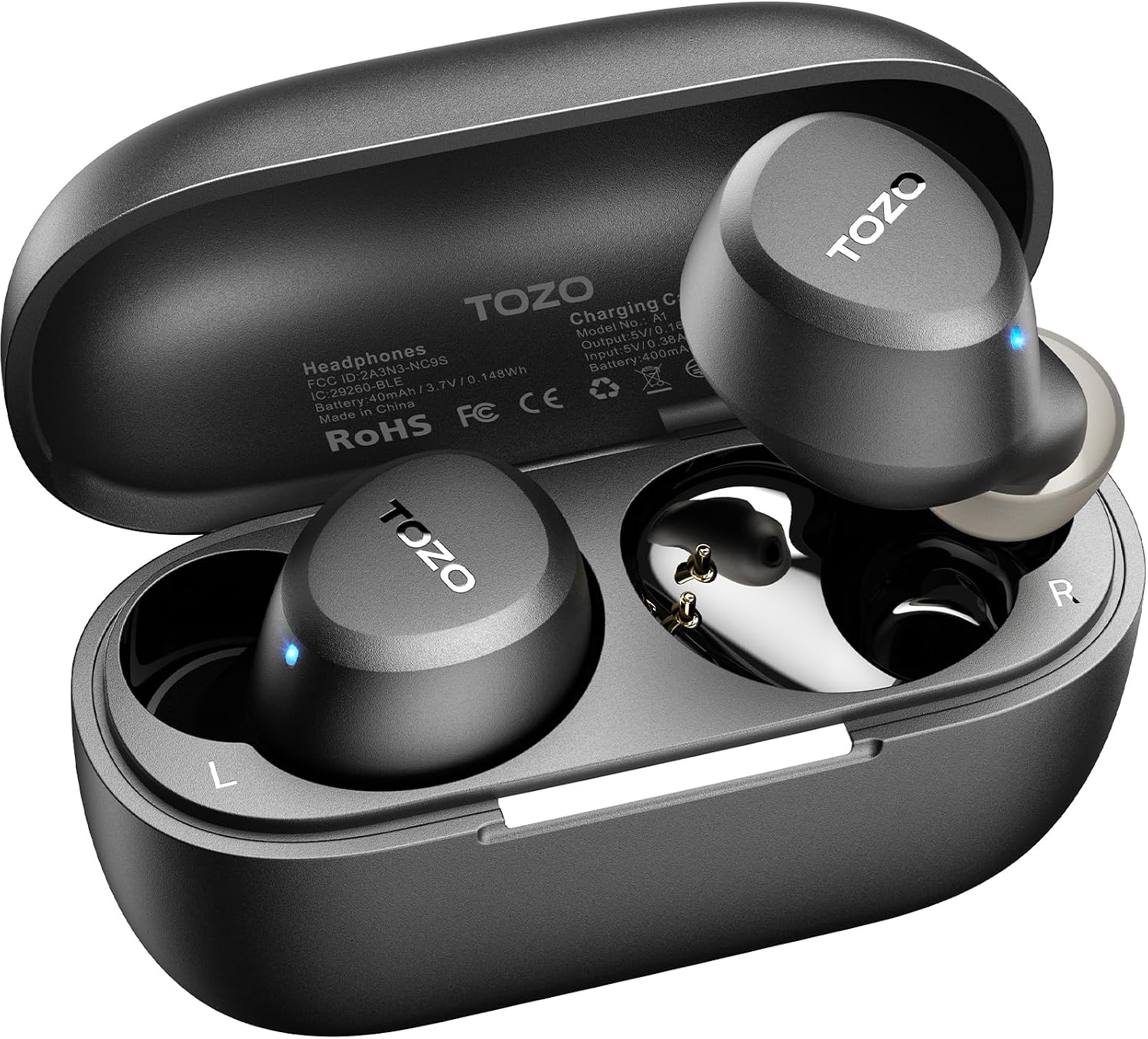 Visit on Amazon → Visit on Amazon →TOZO A1 |
Cheapest pair | Bluetooth 5.3, light weight in-ear design | Volume floor, independent bud use, tip fit |
| Visit on Amazon → Soundcore Space A40, second look |
Value benchmark | Anker build and a real feature at a mid price | Whether you need the flagship at all |
The table is not a ranking. It is a set of questions. Answer them for your own ears and your own day, and the choice gets a lot shorter.
Should you buy the Samsung Galaxy Buds 4 Pro (2026)?
Buy it if the newest generation is the point and you want the flagship of this group. It carries the AI features and the 2026 model year, and it is the pair for someone who will not spend the next two years wondering about the one they did not buy.
Do not buy it expecting the price to solve fit. Flagship money does not widen your ear canal. If the tips hurt after twenty minutes, the extra features will not save the experience, and you will be back in the rabbit hole reading reviews that contradict each other. Visit on Amazon →.
Should you buy the Soundcore Space A40?
Yes, if you want noise cancelling without jumping to flagship money. Adaptive active noise cancelling is the reason to look here, and I have bought Soundcore earbuds three times over, which is the strongest endorsement I know how to give. It is the middle of this list and probably the smartest place for most people to land.
The caveat is the same as it is for every cancelling pair. Seal first, then judge. If the tips do not sit right, the feature does nothing for you. Visit on Amazon →.
Should you buy the Beats Solo Buds?
If battery is your first spec, and it should be, this is the pair on the list that leads with it. The listing claims 18 hours of battery life, along with Apple and Android compatibility and a built-in microphone. A cross platform pair with a real microphone is worth a lot if your phone changes or your household is split between two systems.
Verify the number yourself at normal volume. Box numbers and real days are not the same thing. Visit on Amazon →.
Should you buy the TOZO A1?
Buy it if you want to spend as little as possible and you are willing to accept fine. Bluetooth 5.3 and a light weight in-ear design are the right promises at this price, and if it connects, stays connected, and survives a two week fit test on my ears, it has done its job.
Check the volume floor and the tip fit before you commit. Those two things ruin cheap earbuds faster than anything else, and they are the reason I stopped buying generic pairs years ago. Visit on Amazon →.
I said at the top that wired still sounds better, and I meant it. The adapters died, the jack went away, and here we are. What is left is a short list of questions, and a pair that answers them quietly, comfortably, and without announcing POWER ON like an overenthusiastic receptionist. That is the whole game.